


Pólizas Notariales
Las pólizas notariales son documentos notariales de carácter mercantil en los que se produce la formalización de un contrato. Como Notarios en Barcelona especializados en servicios de pólizas mercantiles, queremos explicaros qué son y cómo funcionan, sus diferentes tipos o cómo un Notario puede ayudaros en este proceso, especialmente ahora que se pueden tramitar pólizas online mediante autorización por videoconferencia, por lo que podemos atender clientes de toda España de forma totalmente digital.
¿Qué son las pólizas notariales?
Este tipo de documentos recoge un contrato de tipo mercantil y financiero entre una entidad bancaria o financiera y un particular o una empresa. La intervención notarial otorga validez legal y facilita la ejecución ante posibles incumplimientos del documento. Esta intervención notarial es la característica de las pólizas, ya que mientras otras actuaciones como las escrituras o las actas son autorizadas, las pólizas son intervenidas o autorizadas, dando fe de la firma y el consentimiento para la operación realizada y con efectos para exigir el cumplimiento de lo pactado por vía judicial.
Los contratos que se producen en las pólizas tienen características en común: ser de carácter mercantil y financiero, ser propios del tráfico habitual de uno de los otorgantes y es importante que la póliza no puede tener objeto inmobiliario. Dicho de otra forma, el ámbito de acción de las pólizas se resuelve en actos como prestamos, créditos, avales, descuentos, contratos de factoring, de confirming, cesiones de créditos o derechos, constituciones de prenda, concesión de garantias o contragarantías, entre otras variantes.
No se puede formalizar en pólizas notariales: actos de inmuebles, compraventa de acciones o participaciones sociales, reconocimientos de deudas sociales, poderes u operaciones societarias, que solo podrán hacerse mediante escritura pública. Por tanto, solo pueden dar lugar a una póliza los actos y contratos de carácter mercantil y financiero que sean propios del tráfico habitual y ordinario de al menos uno de los firmantes de la póliza. Por tanto, no pueden estar en póliza los demás actos y negocios jurídicos, especialmente los inmobiliarios.
Tipos o clases de póliza notarial
Existen diferentes tipos de póliza en función de las diversas transacciones comerciales y legales que pueden suceder. Se usan como instrumentos para respaldar el cumplimiento de obligaciones o acuerdos. Entre las más frecuentes encontramos:
- Póliza de Préstamo: en este tipo de póliza, el banco entrega un dinero a un particular o una empresa, que se debe devolver en un plazo determinado y con unos intereses y comisiones.
- Póliza de Crédito: en la póliza de crédito, el banco pone un dinero a disposición del prestatario durante un tiempo estipulado, decidiendo el cliente si utiliza todo o parte del crédito
- Póliza de Leasing o arrendamiento financiero: la persona recibe el uso de un bien a cambio del pago de una cuota mensual durante un tiempo determinado, con la condición de, una vez pagadas las cuotas, se optará a abonar una cantidad y adquirir el bien en cuestión.
- Póliza de Factoring: se contrata a un factos o sociedad de facturing a la que se remunera por proporcionar servicios de gestión, garantías y financiación.
- Póliza de Descuento: en la póliza de descuento una sociedad se obliga a anticipar créditos a un empresario que aún no se podían cobrar, facilitando las necesidades de circulante de los empresarios.
- Póliza de Prenda o Pignoración: en esta póliza la persona garantiza alguna deuda mediante la pignoración de activos financieros. Si la persona que da la garantía (pignorante) no cumple las obligaciones, la entidad financiera se cobrará con el dinero obtenido en la venta de los activos pignorados.
- Póliza de confirming: en este tipo de póliza la entidad bancaria actúa como gestor en los pagos aplazados a proveedores, pudiendo ofrecer financiación a la empresa y a los proveedores.
- Póliza de aval: por este tipo de póliza una persona se compromete a cumplir por otra. Es frecuente la modalidad del aval bancario, por el cual un banco garantiza frente a Hacienda el pago por un cliente suyo, que le pagará al banco por conceder este aval. Los avales bancarios se pueden utilizar también para garantizar pagos a proveedores.
¿Qué partes contiene una póliza?
Cada tipo de póliza ofrece unas características únicas según el tipo de acuerdo y las regulaciones legales que se le aplican. No obstante, las partes comunes de una póliza notarial son las siguientes:
- Lugar y fecha en la que sucede.
- Identificación de Notario (nombre, apellido, residencia y Colegio).
- Nombres, apellidos y domicilios de las partes intervinientes.
- Calificación del acto o tipo de contrato con el nombre que tenga en derecho o según el uso mercantil que se le atribuya.
- Contenido del acto en cuestión.
- Conformidad y aprobación de los representantes y firma.
- Debe incluir el número total de hojas y anexos que conforman el total del texto.
El papel del notario en la firma de pólizas notariales
El papel del Notario ofrece seguridad jurídica a las partes intervinientes del contrato. Además, su neutralidad garantiza que las partes que conforman el trámite reciban un trato justo, informando y asesorando plenamente a todas sobre los términos del documento para evitar abusos o engaños de otras partes intervinientes, sobre todo de cláusulas que puedan incluir en sanciones económicas para los prestatarios. También, con la intervención, el Notario realiza un juicio de capacidad sobre los intervinientes.
Además de ofrecer seguridad jurídica en las pólizas con en su intervención, las dotan de fe pública para que el contenido sea íntegro de acuerdo con lo dispuesto por la ley y aseguren el cumplimiento con todas las leyes y regulaciones. La firma de pólizas notariales ante notario evita la impugnación del documento ante un tribunal y reduce el riesgo de litigios.
Por otro lado, el Notario legitima las firmas y custodia el documento original firmado por las partes, de la cual puede expedir copias para los firmantes.
Existen dos formas de intervenir la póliza. Mediante la incorporación al protocolo general (acta) o al Libro de Registro (diligencia de intervención). También existen dos secciones dentro del Libro de Registro denominadas A y B. En la A se conservan los originales y la B no (letras de cambio o pagarés).
Sea cual sea de las partes intervinientes de una póliza, pida una cita y trámite con nosotros su póliza. Debe saber que tiene libertad en la elección de Notario para ello. Ahora también podemos intervenir diferentes tipos de pólizas mercantiles online para un trámite más rápido y cómodo para usted, firmando con JLA Notarios en un proceso cómodo y moderno, desde su oficina o casa y desde cualquier lugar de España.
Documentación para tramitar pólizas notariales
La documentación aportada dependerá del tipo de contrato que se haya acordado y se establezca entre los intervinientes. En este caso, la participación implica tanto la aportación de documentación por parte de la entidad bancaria como del prestatario, que lo podemos encontrar a nivel empresarial como particular.
La documentación común que se debe aportar es:
- La entidad bancaria: el representante de la entidad financiera deberá presentarse con el DNI en vigor y con el poder notarial para realizar el trámite, esto es la copia auténtica donde se acredita su representación en nombre de la entidad. Actualmente, los apoderados del banco pueden firmar pólizas de forma totalmente online.
- Empresa: este caso es similar al anterior, debiendo aportar su representante el DNI en vigor y el poder notarial que acredita su representación en nombre de la compañía. También se puede presentar su nombramiento como administrador mostrando la copia auténtica donde se acredita dicha representación. Además, existen otras informaciones relevantes relacionadas en la que se incluye la copia auténtica de la constitución de la sociedad y la del acta de titularidad real. En algunos casos se deberá presentar el acuerdo de la Junta de Socios que haya autorizado la operación.
Actualmente, el representante de una empresa puede firmar una póliza de forma totalmente digital sin necesidad de acudir presencialmente a la notaría, si así lo desea. - Particular: la documentación se limitará a que el prestatario presente su DNI en vigor. En el caso de ser extranjero deberá presentar su NIE junto con su pasaporte. Si en la firma de la póliza debiera acudir un representante de esta persona, se deberá aportar el DNI en vigor y el poder notarial que lo acredita a representar el particular.
Los particulares actualmente pueden firmar digitalmente una póliza en cualquier notaría de España por videoconferencia, sin necesidad de desplazarse a la notaría, siempre que así lo deseen.
Precio y trámite online de una póliza Notarial
¿Cuánto cuesta firmar una póliza notarial?
El coste de las pólizas notariales está determinado por ley en el Arancel Notarial. El precio por la intervención de pólizas notariales tiene en cuenta, además, el importe de la póliza, el número de folios, el número de firmas o las garantías que puedan existir. El arancel notarial en pólizas se establece en el Real Decreto 1426/1989 de 17 de noviembre.
El precio de los actos notariales está regulado por el Gobierno y se ajusta a la normativa reguladora del ARANCEL NOTARIAL (RD 1426/1989, de 17 de noviembre, por el que se regula el Arancel de los Notarios).
No obstante, el precio exacto de un documento notarial no puede calcularse hasta que se conoce su contenido concreto, es decir, hasta que esté firmado, pues son muchas las circunstancias que lo pueden hacer variar. El número de copias que se pide de un documento, los folios que contiene además de posibles cambios o añadidos pueden variar ligeramente el precio final.
En el coste de una póliza notarial es muy importante la cuantía del préstamo o crédito, el tiempo de duración de la póliza y si hay fianza o aval de alguna de las partes (en el caso de fianza el coste de una póliza se incrementa en el 50%).
Si desea recibir un presupuesto detallado, gratuito y sin compromiso, le invitamos a contactarnos directamente por la vía que le resulte más conveniente. Lo puede hacer a través del formulario de contacto de la página principal de esta web, mediante la sección contactar que encontrará en el pie de página de la web, usando el acceso directo a WhatsApp en la parte inferior derecha de esta página, enviando un correo electrónico a bcn@jlanotarios.com o llamándonos al teléfono 93 159 17 62.
De forma orientativa, y en los casos más prototípicos le podemos adelantar que, de acuerdo a la normativa reguladora vigente, el precio habitual de la formalización ante notario de una póliza sin cuantía es de unos 35 euros.
De forma orientativa, en las pólizas de cuantía como la póliza de préstamo o crédito por un importe de 20000€ el coste de notaría es de unos 90 €, incluyendo IVA. Una póliza notarial de préstamo o crédito de 50000 euros tendría un coste de unos 180-200 euros, incluyendo el iva; y una póliza de crédito o préstamo de importe de 100000 euros costaría unos 300-370 euros.
Lo mejor es pedir presupuesto, ya que este precio indicativo está calculado para un documento de contenido habitual con los importes señalados, con vencimiento de un año, sin garantes o fiadores y en el que el titular de la póliza es un particular. En otros casos el coste variará, por ejemplo, es muy habitual que haya fianza junto a una póliza de préstamo o crédito y en tales casos, el coste de notaría de la póliza se incrementa en un 50%. Además, también puede haber cambios por el plazo o por la existencia de otras garantías y también en el caso de que en la póliza intervengan sociedades es posible tener que incorporar más documentos.
Tramitar una póliza notarial online
Desde el 9 de noviembre 2023, gracias a la aprobación de la ley 11/2023, de 8 de mayo, es posible tramitar pólizas notariales online por video conferencia.
En JLA Notarios trabajamos de forma empática y dinámica, aplicando las nuevas tecnologías en todos los trámites para su confort y comodidad. Por este motivo, somos también una Notaría online, en la que gestionamos muchos servicios notariales de forma electrónica, para optimizar los tiempos de transacción de su trámite mediante la firma digital por videoconferencia. Si necesita la gestión de pólizas notariales online, no dude en concertar cita con nosotros. Esta nueva vía alternativa le seguirá ofreciendo la misma seguridad jurídica, con ventajas y beneficios incluidos como evitar desplazamientos, ahorro de tiempo, mejora de la celeridad del proceso y agilizar la transmisión de información.
Por tanto, desde JLA Notarios podemos tramitar su póliza sin que tenga que desplazarse de su domicilio o empresa y desde cualquier punto de España, ya que en pólizas trabajamos como notarios digitales y podemos hacer todos los trámites online.
Más preguntas frecuentes relacionadas con Pólizas Notariales
A continuación, contestamos las preguntas que más escuchamos en la notaría.
¿Qué sucede si se incumple una póliza?
Las pólizas notariales tienen carácter ejecutivo, por lo cual, según la Ley 1/2000 de 7 de enero de Enjuiciamiento Civil, repercute directamente en el inicio del proceso judicial, sin deber declararse en un juzgado los derechos del demandante.
Es decir, ante un incumplimiento de contrato, la parte que ha cumplido puede solicitar la copia de la póliza notarial en la notaría correspondiente para demandar a la otra parte interviniente, saltándose la fase previa declarativa y buscando en los tribunales la ejecución del derecho reconocido en póliza notarial.
¿Las pólizas notariales requieren de unidad de acto?
La unidad de acto implica que cualquier acto jurídico se cumpla en ese mismo momento, sin que exista ninguna interrupción temporal. En la intervención de póliza no existe tal requisito, por lo que no requiere la unidad de acto.
Es por este motivo que, aunque el Notario indique el nombre del otorgante, fecha, circunstancia que considere necesario para la firma y sello entre las partes intervinientes, es frecuente que los representantes de las entidades bancarias no estén presentes en la firma de la póliza notarial.
¿Quién paga la póliza notarial?
El prestatario (empresa o particular que solicita la póliza) será quien escoja libremente al Notario y también le corresponderá el pago de los honorarios notariales según la ley. Por tanto, el cliente que reciba el préstamo o crédito de la póliza o el que la ha solicitado al banco será quien tenga que pagar los gastos notariales de una póliza.
¿Qué es la subsanación de pólizas?
Con subsanar una póliza nos referimos a corregir errores u omisiones en informaciones incorrectas, detalles faltantes o tipográficos.
Se pueden subsanar las pólizas siempre que el error sea material. Lo puede hacer el Notario.
En caso de errores más graves, como el que pueda existir en tipos de interés, deberán volver los intervinientes para la corrección de la póliza, firmando la corrección de manera presencial o digital.
¿Qué son las pólizas intervenidas o no intervenidas?
Hasta ahora hemos escrito sobre pólizas intervenidas. Las pólizas intervenidas son aquellas que han sido firmadas ante Notario y, por tanto, tienen fuerza directamente ejecutiva. Sin embargo, una póliza no intervenida es aquella en la que no se ha producido la intervención del Notario. Por lo tanto, solo muestra el acuerdo original entre las partes involucradas, afectando, sobre todo, a la capacidad ejecutiva de ellas.
¿Qué es la póliza desdoblada en el reglamento notarial?
La póliza desdoblada es un término del mundo notarial que se refiere a la póliza que es firmada por distintos de sus intervinientes en distintas notarías. Normalmente sucede cuando, en la intervención de una operación, se requiere la firma de documentos por otras partes intervinientes que se encuentren fuera del ámbito de la competencia territorial del Notario.
En una póliza desdoblada el Notario inicial debe conservar el original de la copia y no puede desprenderse de él, pero existe más de un original desdoblado de la misma póliza (tantos como Notarios intervengan) que deberá ser intervenida y conservada por cada uno de los Notarios que hayan participado en el acto, sin poder remitirla entre ellos, pero si debiendo conservarla en su Libro Registro o Protocolo.
Dicho de otra forma, las pólizas pueden ser intervenidas de forma sucesiva y la póliza desdoblada consiste en extender tantas pólizas completas como Notarios intervienen.
JLA Notarios para tramitar tus pólizas notariales
Tanto la relevancia de las pólizas notariales como la importancia del papel del Notario en su intervención ha quedado plasmada a lo largo de este escrito. En JLA Notarios somos una Notaría digital especializada en pólizas y puede tramitar su póliza de forma totalmente digital con nosotros y firmando electrónicamente. Puede contactarnos al mail polizas@jlanotarios.com y le atenderá uno de nuestros especialistas en pólizas.
Como Notarios en Barcelona disponemos de un equipo de Notarios altamente calificados y experimentados para el trámite de pólizas notariales. En JLA Notarios somos expertos en las regulaciones que se aplican y le podemos ofrecer un asesoramiento personalizado respondiendo en todo momento a sus preguntas y preocupaciones. Puede tramitar su póliza digitalmente o acudir a firmar presencialmente a nuestra Notaría en la Avenida Diagonal de Barcelona.
Póngase en contacto con nosotros para una consulta inicial. Le ayudaremos a través de todo el proceso gestionando con eficiencia su gestión. Reserve ahora su primera asesoría en JLA Notarios.
By your side in the moments that matter

Wills and inheritance
Making a will, making a declaration of heirs or awarding inheritance are very important moments in people’s lives.
At JLA Notarios we offer inheritance law services, both to arrange your estate and to divide up inheritance, guaranteeing the best advice for your particular needs while studying the tax implications of each case. We never forget the human factor. We even offer a notary service at home if necessary.

Contracts and property law
Over the course of our lives, we carry out important actions, such as buying a home, declaring a new-build, lifetime gifting to our children or ending partnerships, among many others.
At JLA Notarios we are experts in property and contract law and buying and selling property. We guide our clients, analysing each particular issue and always considering the tax burden of each transaction.
In addition, some of our notarial services can be performed online, so we can assist you from anywhere in Spain. Contact us to declare a new-build or a commonhold ownership structure online.

Mortgage
Taking out a mortgage is one of the biggest moments for anyone. Just think of the fees and interest you may have to pay for much of your life. So it is essential to have a trusted notary to help you understand what you are signing, explaining the tricky legal terms and their future consequences in simple words, to provide transparency and protect our clients.
At JLA Notarios we are aware of the importance of giving complete and understandable information to people about to sign a mortgage, novation or subrogation. We also advise and guide you on your future mortgage cancellation.
Loan agreements and credit facilities
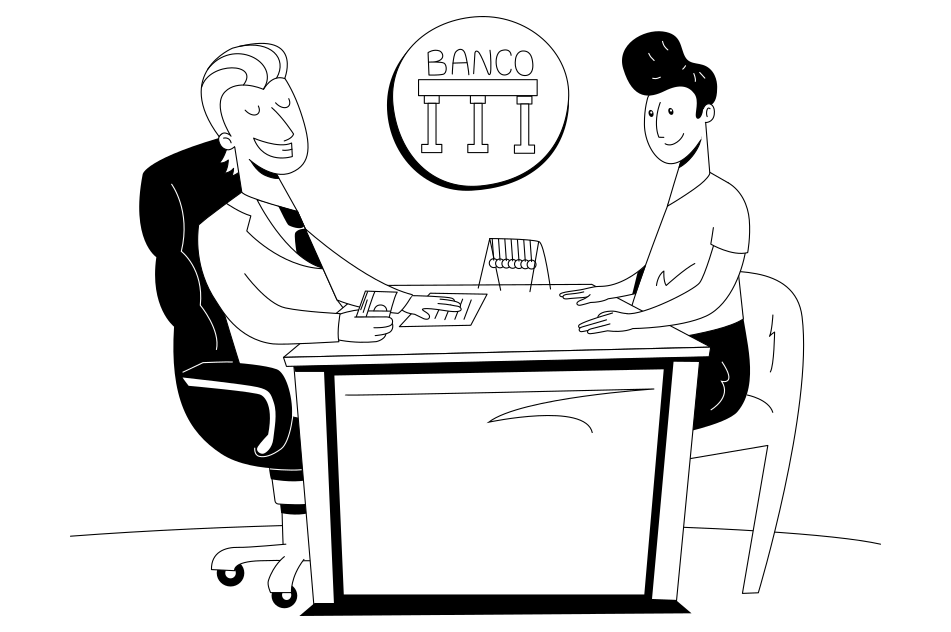
Individuals and companies often need money to fulfil their dreams or projects. This can be obtained by taking out a loan or credit facility with your bank. When you sign, it is essential to understand the details properly to avoid future surprises.
JLA Notarios can be your trusted notary office, giving you accurate advice on loan contracts, providing a very agile and specialised service for processing loan contracts.
Bear in mind that from 9 November 2023, you will be able to sign your loan contracts from anywhere in Spain electronically by videoconference with JLA Notarios, saving you time and money. Do not hesitate to contact us to find out more about the notary office’s services in order to sign a loan contract online or sign a credit facility online.
Companies
Without entrepreneurship there is no future, so it is of vital importance to support our businesspeople and entrepreneurs.
At JLA Notaries we are familiar with companies’ life cycle, which enables us to provide legal assistance for companies in their different stages, whether incorporation, modifications of their articles of association, changes of director, share sales and purchases, capital increases and reductions, dissolution and closure, and everything related to commercial matters.
Powers of attorney
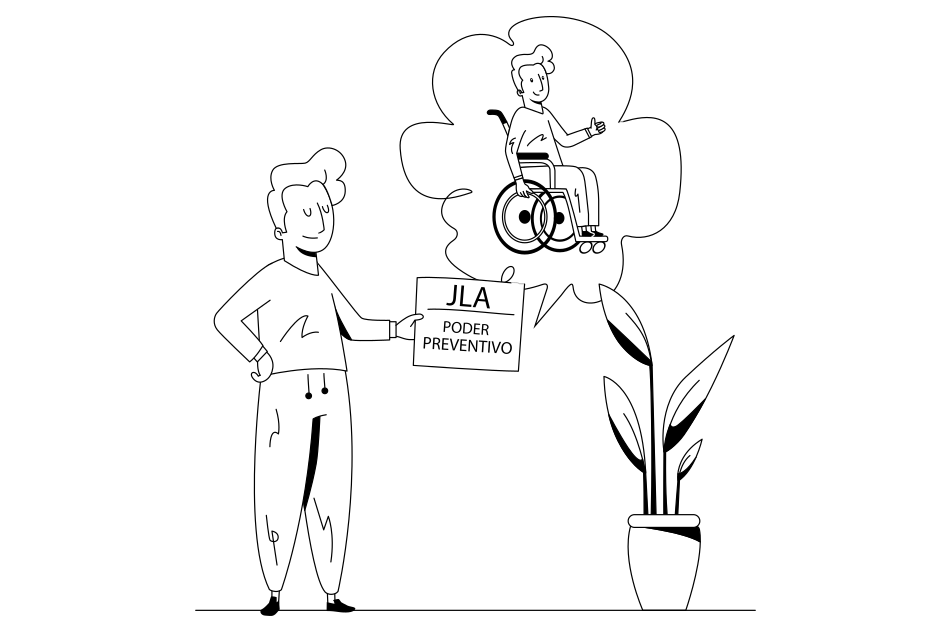
There are moments in life when a person needs to delegate. The law provides a tool for this: powers of attorney. Though a power of attorney, one person allows another person to act on their behalf.
At JLA Notarios we make sure that you understand the significance and risks of delegating or revoking powers of attorney, from a special power of attorney or power of attorney for lawsuits, to general powers of attorney or preventive powers of attorney for cases of incapacity.
We provide an agile service to sign powers of attorney. You can take your copy away immediately, saving you unnecessary trips, and from 9 November 2023 our clients will be able to sign all powers of attorney that are not general or preventive by videoconference through our digital notary office.

Family affairs
A prosperous society is based on the family and its protection. Family Law provides you with the tools to protect your family and its members, so its foundations are solid and its purposes can be achieved.
At JLA Notarios we provide legal advice on marriage or civil partnerships; property aspects of the family through marriage contracts or civil partnership contracts; the moments when the family relationship is ended, in cases such as divorce or separation; and protection of vulnerable people, such as minors or people with modified capacity, through deeds of appointment of guardians or executors or creation of protected assets. We do all of this in a way that makes everyone involved feel equally supported and secure.

Certifications and authentications
It is common knowledge that notaries attest. That important and simple action can guarantee things of vital importance, such as ensuring that the signature on a document is authentic or certifying that a copy of a document matches the original.
At JLA Notarios we will help you to certify a document or notarise a signature in accordance with the law and tailored to your specific needs.
In addition, these notarial procedures can be carried out conveniently through electronic means from 9 November 2023.
Notarial deeds
How many times have you wanted to record an event, a statement or the status of an object, or to notify someone of an issue. The law provides us with notarial deeds to deal with these matters.
At JLA Notarios we adapt to you, stating in the deed what you need and issuing your notifications and requests.
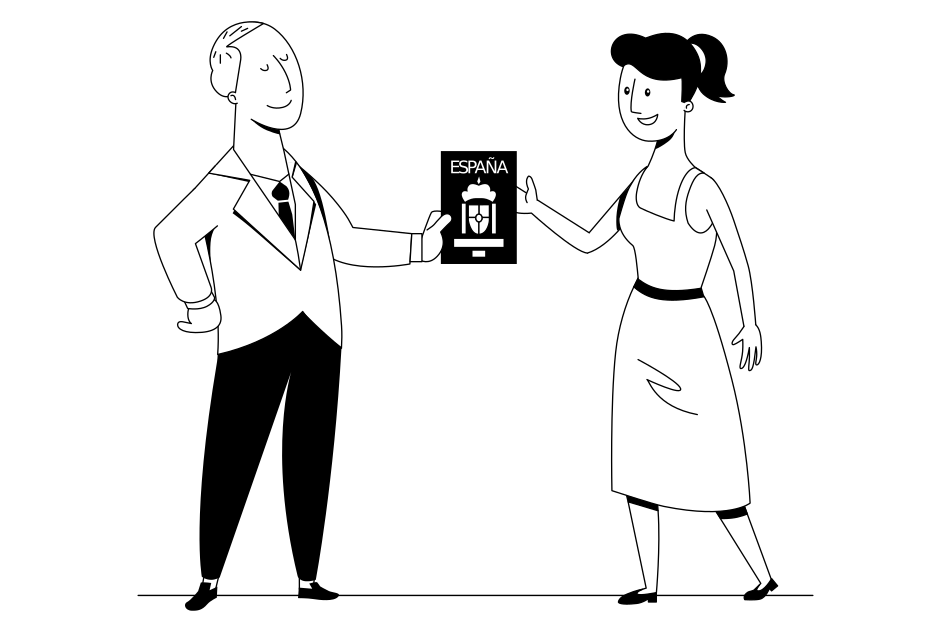
Oath of citizenship
Behind every oath of citizenship lies a story of overcoming, sacrifice and waiting.
At JLA Notarios we know what this moment means and we provide an empathetic, agile and fast service. We don’t just advise you about the actual swearing-in, but also inform you of the future requirements that new Spanish citizens need to know.
We are your go-to notary’s office to swear the oath of citizenship before a notary public in Barcelona.

Apostille of the hague convention
Globalisation enables the free movement of people and documents of all kinds. How can you guarantee that a document has been officially issued? With an apostille of the Hague Convention.
JLA Notarios can obtain an apostille for all documents executed before us so they are valid and recognised abroad. We do this transparently and save you all the bureaucratic procedures involved.
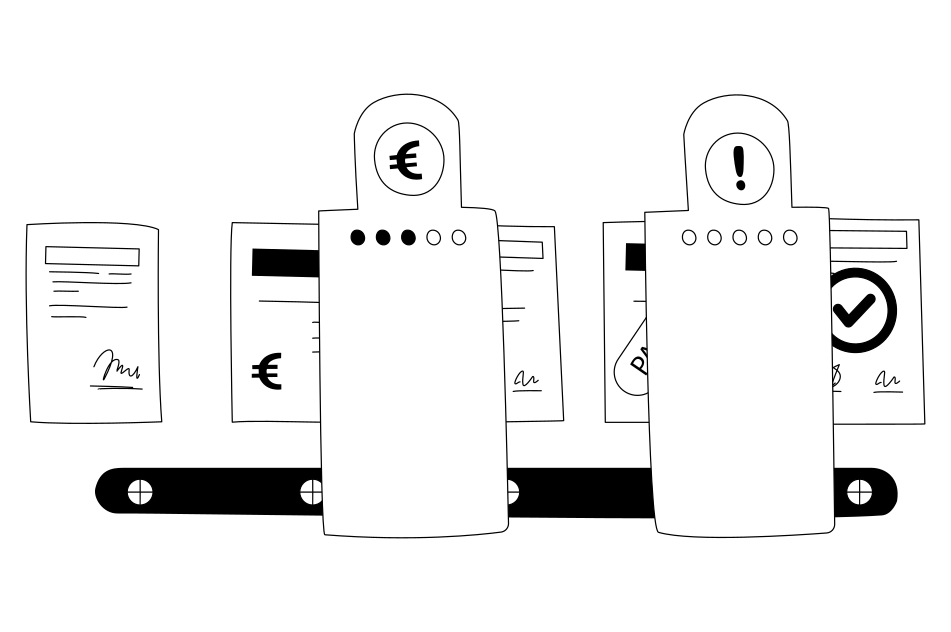
Tax and registry procedures
Tax bureaucracy can cause a lot of headaches.
So JLA Notarios offers its clients the possibility of assessing and paying the many different taxes by the executing deeds and carrying out other procedures before the notary. We can also file them with the Land or Companies Registry so you do not have to concern yourself with it and can spend your time on the things that matter. We support you from start to finish.
Wills and inheritance
Making a will, making a declaration of heirs or awarding inheritance are very important moments in people’s lives.
At JLA Notarios we offer inheritance law services, both to arrange your estate and to divide up inheritance, guaranteeing the best advice for your particular needs while studying the tax implications of each case. We never forget the human factor. We even offer a notary service at home if necessary.
Contracts and property law
Over the course of our lives, we carry out important actions, such as buying a home, declaring a new-build, lifetime gifting to our children or ending partnerships, among many others.
At JLA Notarios we are experts in property and contract law and buying and selling property. We guide our clients, analysing each particular issue and always considering the tax burden of each transaction.
In addition, some of our notarial services can be performed online, so we can assist you from anywhere in Spain. Contact us to declare a new-build or a commonhold ownership structure online.
Mortgage
Taking out a mortgage is one of the biggest moments for anyone. Just think of the fees and interest you may have to pay for much of your life. So it is essential to have a trusted notary to help you understand what you are signing, explaining the tricky legal terms and their future consequences in simple words, to provide transparency and protect our clients.
At JLA Notarios we are aware of the importance of giving complete and understandable information to people about to sign a mortgage, novation or subrogation. We also advise and guide you on your future mortgage cancellation.
Loan agreements and credit facilities
Individuals and companies often need money to fulfil their dreams or projects. This can be obtained by taking out a loan or credit facility with your bank. When you sign, it is essential to understand the details properly to avoid future surprises.
JLA Notarios can be your trusted notary office, giving you accurate advice on loan contracts, providing a very agile and specialised service for processing loan contracts.
Bear in mind that from 9 November 2023, you will be able to sign your loan contracts from anywhere in Spain electronically by videoconference with JLA Notarios, saving you time and money. Do not hesitate to contact us to find out more about the notary office’s services in order to sign a loan contract online or sign a credit facility online.
Companies
Without entrepreneurship there is no future, so it is of vital importance to support our businesspeople and entrepreneurs.
At JLA Notaries we are familiar with companies’ life cycle, which enables us to provide legal assistance for companies in their different stages, whether incorporation, modifications of their articles of association, changes of director, share sales and purchases, capital increases and reductions, dissolution and closure, and everything related to commercial matters.
Powers of attorney
There are moments in life when a person needs to delegate. The law provides a tool for this: powers of attorney. Though a power of attorney, one person allows another person to act on their behalf.
At JLA Notarios we make sure that you understand the significance and risks of delegating or revoking powers of attorney, from a special power of attorney or power of attorney for lawsuits, to general powers of attorney or preventive powers of attorney for cases of incapacity.
We provide an agile service to sign powers of attorney. You can take your copy away immediately, saving you unnecessary trips, and from 9 November 2023 our clients will be able to sign all powers of attorney that are not general or preventive by videoconference through our digital notary office.
Family affairs
A prosperous society is based on the family and its protection. Family Law provides you with the tools to protect your family and its members, so its foundations are solid and its purposes can be achieved.
At JLA Notarios we provide legal advice on marriage or civil partnerships; property aspects of the family through marriage contracts or civil partnership contracts; the moments when the family relationship is ended, in cases such as divorce or separation; and protection of vulnerable people, such as minors or people with modified capacity, through deeds of appointment of guardians or executors or creation of protected assets. We do all of this in a way that makes everyone involved feel equally supported and secure.
Certifications and authentications
It is common knowledge that notaries attest. That important and simple action can guarantee things of vital importance, such as ensuring that the signature on a document is authentic or certifying that a copy of a document matches the original.
At JLA Notarios we will help you to certify a document or notarise a signature in accordance with the law and tailored to your specific needs.
In addition, these notarial procedures can be carried out conveniently through electronic means from 9 November 2023.
Notarial deeds
How many times have you wanted to record an event, a statement or the status of an object, or to notify someone of an issue. The law provides us with notarial deeds to deal with these matters.
At JLA Notarios we adapt to you, stating in the deed what you need and issuing your notifications and requests.
Oath of citizenship
Behind every oath of citizenship lies a story of overcoming, sacrifice and waiting.
At JLA Notarios we know what this moment means and we provide an empathetic, agile and fast service. We don’t just advise you about the actual swearing-in, but also inform you of the future requirements that new Spanish citizens need to know.
We are your go-to notary’s office to swear the oath of citizenship before a notary public in Barcelona.
Apostille of the hague convention
Globalisation enables the free movement of people and documents of all kinds. How can you guarantee that a document has been officially issued? With an apostille of the Hague Convention.
JLA Notarios can obtain an apostille for all documents executed before us so they are valid and recognised abroad. We do this transparently and save you all the bureaucratic procedures involved.
Tax and registry procedures
Tax bureaucracy can cause a lot of headaches.
So JLA Notarios offers its clients the possibility of assessing and paying the many different taxes by the executing deeds and carrying out other procedures before the notary. We can also file them with the Land or Companies Registry so you do not have to concern yourself with it and can spend your time on the things that matter. We support you from start to finish.


