


Disolución y liquidación de sociedades
La disolución y liquidación de sociedad marca el final del ciclo de una compañía y forma parte de la extinción de una sociedad mercantil. Como Notarios en Barcelona especializados en servicios mercantiles, queremos resolver todas sus dudas e indicar paso a paso cada una de las fases de este procedimiento.
Actualmente puede disolver y liquidar su sociedad mercantil de forma totalmente digital y por videoconferencia con nuestra notaría por videoconferencia, desde su propio domicilio o empresa, desde cualquier punto de España. Puede contactarnos a bcn@jlanotarios.com , desde donde uno de nuestros especialistas en Derecho mercantil y disolución de sociedades le contactará y podrá firmar escritura de disolución y liquidación de sociedad de forma presencial o por videoconferencia en nuestra notaría.
¿Qué es la disolución y liquidación de sociedades en España?
Se trata de un trámite legal y fiscal que tiene varias connotaciones. Y, es que, disolución y liquidación no son exactamente lo mismo, sino dos etapas diferentes en la extinción de una empresa con el objetivo de concluir su actividad. Así, la disolución se configura como un paso anterior a la liquidación y es necesaria para que se pueda producir la liquidación de la misma. Procedamos a conocer más sobre ellas y sus diferencias.
¿Qué es la disolución de una sociedad?
La disolución de sociedad está regulada en el Texto Refundido de la Ley de Sociedades de Capital (TRLSC). Esta puede ocurrir por tres tipos de causas: disolución de pleno derecho, disolución por causa legal o estatutaria o disolución por acuerdo de los socios. Analizaremos por separado estas causas.
Causas de disolución de sociedad por pleno derecho
- Se produce la disolución de una sociedad por el transcurso del término de duración estipulado en los estatutos, a no ser que se haya prorrogado e informado debidamente
- Por el transcurso de un año desde el acuerdo de reducción de capital social por debajo del mínimo legal como consecuencia del cumplimiento de una ley. Esta causa opera solo cuando no se haya inscrito antes en el Registro Mercantil la transformación o disolución de la sociedad, o el aumento de capital hasta cumplir el mínimo legal.
En este último caso si transcurre un año sin tomar las medidas legales, los administradores responderán personal y solidariamente de las deudas de la sociedad.
Estas causas de disolución de pleno derecho operan de forma automática, sin necesidad de acuerdo de la Junta y el Registro Mercantil debe hacer constar la disolución a instancia de cualquier interesado.
Disolución de Sociedad mercantil por causa legal o estatutaria
Las causas legales y estatutarias de disolución de sociedades son las siguientes:
- El cese de la actividad que esté definida como objeto social (se considera que se produce el cese de forma automática tras un período de inactividad superior a un año).
- La conclusión del negocio que constituye el objeto específico de la sociedad.
- Imposibilidad de realizar su objeto social.
- La paralización de órganos sociales que imposibilitan el funcionamiento de la sociedad en la práctica.
- Pérdidas que reduzcan el patrimonio neto a una cantidad inferior a la mitad del capital social o por reducción del capital social por debajo del mínimo legal, salvo que se aumente o reduzca el capital para evitar esta causa de disolución.
- Por reducción del capital de la sociedad por debajo de la cifra mínima exigida por la ley, siempre que no derive del hecho de cumplir una ley.
- Por reducción del valor nominal de las participaciones sociales sin voto o de las acciones sin voto excedieran de la mitad del capital social (si no se reestableciera en dos años esta situación).
- Por otras causas establecidas en los estatutos de la sociedad.
La disolución por causa legal o estatutaria no se produce de forma automática, sino que requiere un acuerdo de la Junta de socios o una resolución de un Juez que decreta la disolución. En el caso de disolución derivada de acuerdo de Junta será necesario tramitar ante notario escritura de disolución y liquidación de sociedad.
Disolución de sociedad por resolución judicial
La Disolución judicial de sociedad podrá producirse por resolución judicial, cuando hay una causa legal o estatutaria de disolución y los socios no se ponen de acuerdo. En tal caso, cualquiera de los socios puede acudir al Juez para que decrete la disolución de la sociedad.
No obstante, debe conocer que si hay acuerdo de los socios será más sencillo y barato el procedimiento, pues en vez de evitar un largo proceso judicial bastará con que firme escritura el liquidador de la sociedad en notaría.
Además, debe saber que hoy en día las escrituras disolución de sociedades y de liquidación, en caso de acuerdo de los socios, se pueden firmar presencialmente acudiendo a nuestra notaría en la Avenida Diagonal de Barcelona, o de forma totalmente digital mediante firma por videoconferencia con uno de los notarios de JLA Notarios, desde el lugar que usted quiera.
Disolución de sociedad de responsabilidad limitada por acuerdo
Esta es la causa más común de proceder a la disolución de una sociedad, por el simple acuerdo de los interesados. En el caso de sociedades de responsabilidad limitada, se acordará según la mayoría ordinaria decretada en el Texto Refundido de la Ley de Sociedades de Capital. Esto es, por la mayoría de los votos de los socios presentes en la Junta, siempre que representen, al menos, un tercio de los votos correspondientes a las participaciones sociales en las que se divide el capital social.
En cuanto a los requisitos de constitución de la Junta que acuerda la disolución, debe saber que no hay quórum de constitución de esa Junta, salvo en las Sociedades Anónimas que luego veremos. No obstante, después de la celebración de la Junta de socios que acuerda disolver una sociedad, será necesario formalizar en notaría escritura de disolución de sociedad mercantil.
Disolución de sociedad anónima por acuerdo
Respecto a las sociedades anónimas, en primera convocatoria, la Junta de socios deberá representar como mínimo el 25% del capital suscrito con derecho a voto. En segunda convocatoria, no hay quorum de constitución.
En cuanto a la adopción de acuerdo de disolución de sociedad anónima, basta el voto favorable de la mayoría simple de los accionistas presentes.
¿Cuáles son los efectos de la disolución de una sociedad?
Los efectos de la disolución de una sociedad son comunes a todas las clases de sociedades. Básicamente el efecto de la disolución de una sociedad es que se abre el periodo de liquidación de la misma, según establece la legislación societaria.
Tras la disolución, la sociedad conservará su personalidad mientras la liquidación se realiza y deberá añadir a su denominación la expresión “en liquidación”. Además, el objeto social ya no será el que consta en los estatutos sino la propia liquidación de la sociedad.
Por otro lado, cesarán los administradores de la entidad y se procederá a designar liquidadores, que podrán coincidir o no con los anteriores administradores, y cuya función principal es llevar a efecto el nuevo objeto social; la liquidación.
En cuanto a los efectos de la disolución frente a terceros, la disolución no producirá efectos frente a terceros mientras no sea inscrita en el Registro Mercantil.
¿Disuelta una sociedad se puede reactivar?
Sí, una sociedad que se haya disuelto y antes de llevar a efecto la liquidación, puede reactivarse y continuar su actividad, pero para ello son necesarios varios requisitos:
- Que exista una voluntad inequívoca de reactivar la sociedad y continuar con la actividad.
- Que la causa legal o estatutaria que haya motivado la disolución haya desaparecido.
- Que la causa de disolución no opere de pleno derecho, salvo nuevo consentimiento. Hay causas de disolución de pleno derecho, como haber alcanzado el término de duración de la sociedad, pero nada impide que se reactive si se presta un nuevo consentimiento, como señaló la Resolución de la DGRN de 9 de junio de 2014.
- Que el patrimonio contable no sea inferior al capital social.
- Que no haya comenzado el pago de la cuota de liquidación. Puede haberse iniciado el proceso de liquidación, con la aprobación de l balance final, haber pagado a los acreedores, etc., pero no puede haberse iniciado el reparto del haber de la sociedad entre los socios al tiempo de reactiva la sociedad.
¿Qué es la liquidación de la Sociedad?
Denominamos liquidación de la sociedad al proceso que se realiza tras la disolución de la sociedad y que permitirá extinguir la sociedad de forma definitiva, pagando a los acreedores y repartiendo lo que quede entre los socios.
Así, en la liquidación de una sociedad se realiza el reparto de patrimonio entre los socios de una empresa, después de haber cobrado sus créditos, liquidado sus activos, tramitado el pago de pasivos y deudas. No obstante, también puede acontecer que una sociedad no contenga deudas, por lo que la disolución y liquidación de una sociedad se puede producir de forma simultánea.
Cuando una empresa se disuelve, surgen efectos inmediatos como el mantenimiento de su personalidad jurídica o la paralización de su actividad, para proseguir inmediatamente con la fase de liquidación. Durante este período desaparece el órgano de administración y se sustituye por los liquidadores, aunque subsiste la Junta de socios. Asimismo, otra de las características de este período es que, si se extiende más de un año, el balance anual de la sociedad se substituye por un estado de cuentas.
¿Qué tramites realiza el liquidador?
La idea central es que el liquidador tiene poder de representación de la sociedad para todas las actuaciones necesarias para la liquidación, pues la liquidación es el nuevo objeto social. Todo el procedimiento está regulado en el Texto Refundido de la Ley de Sociedades de Capital.
Así, el liquidador inventariará la sociedad y creará un balance el día de la disolución, cobrará créditos sociales, pagará las deudas contraídas con terceros, las existentes entre los socios o accionistas y con terceros que formaban parte de la esfera empresarial o, por último, las de la empresa con socios o accionistas. Por otro lado, realizará la gestión contable, venderá bienes y se reunirá con la Junta de socios, para exponer la forma en la que se está produciendo la liquidación según la legislación y lo establecido en las normas estatutarias de la sociedad.
Finiquitadas las deudas y habiendo pagado a los acreedores o realizado el depósito de los créditos de estos con arreglo a la ley, el balance final se someterá a aprobación en la Junta General. También se deberán presentar, para su estudio, los documentos con las transacciones realizadas, que reflejen la cuota de liquidación de cada socio y la división entre los socios o accionistas del activo resultante. Por último, el liquidador deberá repartir lo que quede del patrimonio social entre los socios.
Extinción de una sociedad: la escritura de disolución y liquidación de sociedad
Realizado el balance final y acordada la disolución de la empresa, se procede a la elevación a público del acuerdo ante Notario.
Escritura de disolución y liquidación de sociedad ante Notario
La escritura de disolución y liquidación de sociedad también es conocida como escritura de extinción de sociedad.
La escritura pública deberá contener el acuerdo de aprobación del balance final, el balance final, la declaración de pago de los acreedores, la división del haber social y la distribución del patrimonio.
La escritura de disolución y liquidación debe ser firmada ante Notario por el liquidador. Actualmente, puede firmar escritura de disolución de su sociedad con nuestra notaría de forma presencial o de forma totalmente digital, firmando por videoconferencia.
El papel del Notario en la disolución y liquidación de una sociedad
El Notario tiene un papel destacado en la disolución de la sociedad ya que asesora a los socios sobre los procedimientos legales y fiscales y aconseja de manera imparcial y gratuita. Sea cual sea el trámite que esté valorando, expónganos sus dudas y realice las consultas necesarias.
En el caso de escrituras de disolución y liquidación de sociedad le podemos asesorar sea cual sea el tipo de sociedad que necesite disolver, pues en JLA Notarios somos especialistas en todas las ramas del derecho mercantil notarial, incluyendo la disolución y liquidación de sociedades.
Asimismo, el Notario es el encargado de la redacción de la escritura y de verificar que la documentación entregada cumpla con los requisitos para su presentación en el Registro Mercantil. Además, certifica la autenticidad de los documentos y asegura que las transacciones cumplan con las leyes y regulaciones. Por último, garantiza la seguridad jurídica otorgando credibilidad a los hechos que se presentan en la escritura. Además, desde JLA Notarios podemos encargarnos de la inscripción en el registro de la Propiedad de su escritura.
Documentación para la escritura pública ante Notario
¿Qué documentación se necesita para tramitar la escritura?
- DNI, NIE, pasaporte o tarjeta de residencia en vigor del liquidador, que debe firmar ante Notario, bien de forma presencial o por videoconferencia.
- Certificado del acuerdo social adoptado por la junta general (o por el socio único) para la disolución y liquidación de la sociedad, donde se muestre la causa por la que se acuerda la misma.
- Balance final que muestre el activo y pasivo.
- Documentación de la sociedad y su representante que demuestre el acuerdo para la disolución y liquidación de la sociedad, es decir, la copia auténtica de la escritura de constitución y escrituras de modificación de estatuto social. No obstante, podemos hacer desde JLA Notarios consulta al Registro Mercantil y prescindir de este requisito.
- Acta de titularidad real: documento donde se identifican los socios que tienen más del 25% del capital social en ese momento.
Tramitar la disolución y liquidación de una empresa online
En JLA Notarios, estamos a la vanguardia de la modernización de procesos. Ahora, puede tramitar las escrituras de disolución y liquidación de empresa de manera telemática, directamente con nosotros, firmando el liquidador por videoconferencia.
Igual que muchos otros servicios de Notarios para empresas, a partir del 9 de noviembre 2023, gracias a la aprobación de la Ley 11/2023, de 8 de mayo, se puede disolver una empresa de forma telemática, a través del Portal Notarial. Es una manera de simplificar sus trámites, que le permite también elegir el Notario que mejor le conviene y genera más confianza.
En JLA Notarios, le brindamos una solución ágil y segura para sus necesidades empresariales, demostrando una vez más nuestro compromiso con la simplificación y la innovación. No dude en contactar con nosotros.
Pasos tras la escritura de disolución y liquidación de sociedades
Una vez, dispongamos de la escritura de disolución y liquidación de la sociedad se deberá presentar en el Registro mercantil Provincial por parte de los liquidadores para cancelar el registro. El registrador inscribirá la disolución y se anunciará en el Boletín oficial del Registro Mercantil. Este constituye el último acto en la hoja registral de la empresa.
Igualmente, se dará de baja censal la sociedad tanto en Hacienda como en la Seguridad Social y se deberá cambiar la titularidad de bienes inmuebles o vehículos.
Desde JLA Notarios nos podemos encargar por usted de la cancelación registral de la sociedad que haya firmado escritura de disolución y liquidación con nosotros, pues ofrecemos a los clientes que lo deseen un servicio integral de gestión de disolución y liquidación de sociedades.
¿Cuánto cuesta firmar la escritura de disolución o liquidación de sociedad ante Notario?
El precio de los actos notariales está regulado por el Gobierno y se ajusta a la normativa reguladora del ARANCEL NOTARIAL (RD 1426/1989, de 17 de noviembre, por el que se regula el Arancel de los Notarios).
De todas formas, el precio exacto de un documento notarial no puede calcularse hasta que se conoce su contenido concreto, es decir, hasta que esté firmado, pues son muchas las circunstancias que lo pueden hacer variar. El número de copias que se pide de un documento, el capital social de la sociedad que se disuelve, el valor en euros de las cuotas de liquidación entre los socios, el número de socios en el caso de la liquidación y los folios que contiene además de posibles cambios o añadidos pueden variar ligeramente el precio final.
Si desea recibir un presupuesto detallado, le invitamos a contactarnos directamente por la vía que le resulte más conveniente. Lo puede hacer a través del formulario de contacto de la página principal de esta web, mediante la sección contactar que encontrará en el pie de página de la web, usando el acceso directo a WhatsApp en la parte inferior derecha de esta página, enviando un correo electrónico a bcn@jlanotarios.com o llamándonos al teléfono 93 159 17 62.
De forma orientativa, le podemos adelantar que, de acuerdo a la normativa reguladora vigente, el precio habitual de la escritura de disolución y liquidación de sociedad en la que no hay reparto de cuotas de liquidación entre los socios y con un capital de 3000 euros, suele oscilar entre 330 y 550 €, incluyendo IVA.
Este precio indicativo está calculado para los casos más frecuentes, que son la disolución y liquidación de sociedad de 3000 euros de capital y sin reparto de cuotas de liquidación, con un documento de contenido habitual y con la expedición de una copia autorizada y dos copias simples.
¿Qué impuestos se deben pagar en la disolución y liquidación de una sociedad?
Una vez otorgada escritura de disolución y liquidación de sociedad ante Notario, es vital el pago de los impuestos pertinentes por disolver una sociedad. La liquidación de una sociedad puede tributar por tres impuestos:
- ITPAJD en su modalidad de Operaciones Societarias.
- IRPF o impuesto de sociedades.
- IIVTNU, también conocido como plusvalía municipal.
¿Cuándo se tributa por Operaciones Societarias en una disolución y liquidación de sociedad?
Como hemos explicado anteriormente, para proceder a la disolución y liquidación de una sociedad se requiere un balance final de liquidación donde figura el activo y el pasivo contables. Con base en este balance se deberá llevar a cabo un reparto de los bienes, derechos y capital que quede en la sociedad, realizándose dicho reparto en proporción a la participación de cada socio en la sociedad, haciéndose constar dicho reparto en la escritura de liquidación.
La liquidación de una sociedad tributará por el ITPAJD, en su modalidad de operación societaria. La regulación de este impuesto viene recogida en el Real Decreto Legislativo 1/1993, de 24 de septiembre, concretamente en los artículos 19 y siguientes. Solo se pagará impuesto de Operaciones Societarias cuando en la liquidación los socios de la sociedad que se disuelve reciban una cuota de liquidación. Si no reciben nada los socios en la disolución de sociedad no se tributará nada.
En este sentido, el artículo 19 declara que “son operaciones societarias sujetas: 1.º La constitución de sociedades, el aumento y disminución de su capital social y la disolución de sociedades”, siendo la base imponible será la suma de los bienes y derechos entregados a cada socio. Así el artículo 25 declara que “en la disolución, la base imponible coincidirá con el valor de los bienes y derechos entregados a los socios, sin deducción de gastos y deudas, determinado de acuerdo con lo dispuesto en el artículo 10 de este texto refundido”
Pero, ¿quién debe pagar el impuesto de operaciones societarias en una disolución y liquidación de sociedad? Según los artículos 23 y 24 del mencionado Real Decreto, lo serán, en primer lugar, cada uno de los socios en proporción a los bienes y derechos recibidos; en segundo lugar, y con carácter subsidiario, lo serán “los promotores, administradores, o liquidadores de las mismas que hayan intervenido en el acto jurídico sujeto al impuesto, siempre que se hubieran hecho cargo del capital aportado o hubiesen entregado los bienes.”
¿Y cuánto tributa la liquidación de una sociedad por Actos Jurídicos Documentados?
El tipo impositivo de las operaciones societarias es del 1%, según el artículo 26, sin perjuicio de que las Comunidades Autónomas hayan fijado otro porcentaje. Por ejemplo, en Cataluña, Valencia o Madrid, el tipo es del 1%. Como hemos dicho, pagarán operaciones societarias los socios solo en el caso de recibir cuotas de liquidación.
¿Cuándo hay que pagar IRPF en la disolución y liquidación de una sociedad?
Cuando el socio es persona física puede existir una ganancia o pérdida patrimonial, por la diferencia entre el importe de lo aportado en su día y el valor de los bienes o derechos que va a recibir al tiempo de la liquidación. Esto viene recogido en la Ley del IRPF, Ley 35/2006, de 28 de noviembre que declara que “en los casos de separación de los socios o disolución de sociedades, se considerará ganancia o pérdida patrimonial, sin perjuicio de las correspondientes a la sociedad, la diferencia entre el valor de la cuota de liquidación social o el valor de mercado de los bienes recibidos y el valor de adquisición del título o participación de capital que corresponda”.
Esta ganancia o pérdida patrimonial, conforme al artículo 46, se integra en la base imponible del ahorro, en la declaración de la renta correspondiente al año en el que se produjo la liquidación y tributa con arreglo a la siguiente tabla:
| Base liquidable del ahorro | Cuota íntegra | Resto base liquidable del ahorro | Tipo aplicable |
|---|---|---|---|
| - | - | - | - |
| Hasta euros | Euros | Hasta euros | Porcentaje |
| 0 | 0 | 6.000 | 19% |
| 6.000,00 | 1.140 | 44.000 | 21% |
| 50.000,00 | 10.380 | 150.000 | 13% |
| 200.000,00 | 44.880 | 100.000 | 27% |
| 300.000,00 | 71.880 | En adelante | 28% |
¿Cuándo hay que pagar IRPF en la disolución y liquidación de una sociedad?
De forma similar a lo que sucede con las personas físicas, las personas jurídicas o sociedades podrán obtener una ganancia o pérdida patrimonial por la diferencia de valor entre el valor de la participación reflejado en el balance de la sociedad y lo percibido al tiempo de la liquidación, tributando en este caso, por el Impuesto de Sociedades al tiempo de su liquidación anual.
No obstante, hay que tener en cuenta que puede suceder que el valor contable de la participación puede ser diferente al valor fiscal de las mismas, por ejemplo, porque se hubieran deteriorado contablemente, en este caso, habría que realizar los ajustes extracontables necesarios a la hora de tributar por el Impuesto de Sociedades, conforme al artículo 13 de la Ley 27/2014, de 27 de noviembre, del Impuesto sobre Sociedades.
Por último, pueden existir plusvalía exenta y renta negativa deducibles, cuando la sociedad que se liquida es una entidad filial, de esta manera el artículo 21.8 de la mencionada ley declara que “serán fiscalmente deducibles las rentas negativas generadas en caso de extinción de la entidad participada, salvo que la misma sea consecuencia de una operación de reestructuración”, siempre que se cumplan los requisitos del propio artículo 21, a saber:
- Que el porcentaje de participación, directa o indirecta, en el capital o en los fondos propios de la entidad sea, al menos, del 5%.
- La participación correspondiente se deberá poseer de manera ininterrumpida durante el año anterior al día en que sea exigible el beneficio que se distribuya.
- En el caso de participaciones en el capital o en los fondos propios de entidades no residentes en territorio español, que la entidad participada haya estado sujeta y no exenta por un impuesto extranjero de naturaleza idéntica o análoga a este Impuesto a un tipo nominal de, al menos, el 10% en el ejercicio en que se hayan obtenido los beneficios que se reparten.
¿Hay que pagar plusvalía municipal en la disolución y liquidación de una sociedad?
El último impuesto solo es aplicable en aquellos supuestos en los que se adjudica un inmueble en la liquidación. En estos casos, al existir una transmisión de un inmueble, deberá liquidarse la plusvalía municipal en el plazo de 30 días a contar desde el otorgamiento de la escritura en el Ayuntamiento donde esté sita la propiedad, siendo el sujeto pasivo la sociedad liquidada, al ser la transmitente, según el artículo 106 del Real Decreto Legislativo 2/2004, de 5 de marzo, Ley Reguladora de las Haciendas Locales.
Más preguntas relacionadas con la extinción de sociedades mercantiles
Si desparece la causa que ha motivado la disolución de la sociedad, se podrá acordar el retorno a la actividad de esta, logrando así la reactivación de la sociedad. Para la reactivación, es imprescindible que el patrimonio contable no sea inferior al capital social y no se haya producido el pago de la cuota de liquidación a los socios.
Para ello, será necesario un nuevo acuerdo societario, en el que se cesarán a los liquidadores y se nombrarán administradores y la firma ante Notario de escritura de reactivación de la sociedad.
La entidad deberá darse de baja del Censo de Empresarios y del Impuesto sobre actividades económicas. También, se deberá dar de baja a los trabajadores contratados y proceder al cierre del lugar donde se desarrollaba la actividad social. De estos trámites específicos se encarga normalmente la gestoría que lleva la contabilidad de la sociedad.
Para dar de baja la entidad en el Censo de Empresarios en Hacienda se deberá rellenar el Modelo 036. Para ello, cuenta con un plazo máximo de un mes tras la inscripción de la extinción de la Sociedad.
Si fuera necesario dar de baja a la entidad en el Impuesto sobre Actividades económicas se deberá rellenar el modelo 840. Dispone de un plazo máximo de un mes tras la inscripción en el Registro de la extinción de Sociedad.
Sí, es necesario inscribir la escritura de disolución y liquidación de sociedad en el Registro Mercantil.
El Registrador Mercantil, en la inscripción transcribirá el balance final de liquidación y hará constar la identidad de los socios y las cuotas de liquidación que recibe cada uno de ellos y expresará que quedan cancelados todos los asientos relativos a la sociedad.
En JLA Notarios ofrecemos un servicio integral en disolución y liquidación de sociedades. Por ello, podemos encargarnos por usted de la inscripción de la sociedad y de la tramitación de todos sus impuestos (a excepción de la renta que debe hacerlo usted por sí o con su gestor el año siguiente dentro de su declaración habitual de IRPF). Pensamos que con este servicio integral, usted puede encomendar a profesionales la disolución y liquidación de sociedad y sus trámites.
Los liquidadores de la sociedad deben depositar en el Registro Mercantil los libros y documentos de la sociedad extinguida o conservar durante seis años toda la documentación social. Este plazo de 6 años se cuenta desde la inscripción de la cancelación de la sociedad en el Registro Mercantil.
JLA Notarios, Notaría para tramitar la escritura de disolución y liquidación de sociedad
Nuestra Notaría en Barcelona dispone de un equipo de Notarios altamente calificados y experimentados para tramitar la escritura de disolución y liquidación de sociedad. Somos expertos en las regulaciones que se aplican y le podemos ofrecer un asesoramiento personalizado en el que nos ajustamos a sus necesidades específicas, respondiendo en todo momento a sus preguntas y preocupaciones. Además, como ofrecemos un servicio notarial integral en disolución y liquidación de sociedades, si usted quiere, aparte de preparar su escritura, podemos tramitar sus impuestos y la inscripción de la disolución en el Registro Mercantil.
En JLA Notarios trabajamos de forma empática y dinámica, aplicando las nuevas tecnologías en todos los trámites para su confort y comodidad. Es nuestro objetivo como Notaría online, en el que gestionamos muchos servicios notariales de forma electrónica, buscar la optimización de los tiempos de transacción de su trámite y mantenerle informado de las novedades que surjan durante el procedimiento.
Póngase en contacto con nosotros para una consulta inicial. Le ayudaremos a través de todo el proceso, resolviendo sus dudas y gestionando con eficiencia su gestión. Reserve ahora su primera asesoría en JLA Notarios.
By your side in the moments that matter

Wills and inheritance
Making a will, making a declaration of heirs or awarding inheritance are very important moments in people’s lives.
At JLA Notarios we offer inheritance law services, both to arrange your estate and to divide up inheritance, guaranteeing the best advice for your particular needs while studying the tax implications of each case. We never forget the human factor. We even offer a notary service at home if necessary.

Contracts and property law
Over the course of our lives, we carry out important actions, such as buying a home, declaring a new-build, lifetime gifting to our children or ending partnerships, among many others.
At JLA Notarios we are experts in property and contract law and buying and selling property. We guide our clients, analysing each particular issue and always considering the tax burden of each transaction.
In addition, some of our notarial services can be performed online, so we can assist you from anywhere in Spain. Contact us to declare a new-build or a commonhold ownership structure online.

Mortgage
Taking out a mortgage is one of the biggest moments for anyone. Just think of the fees and interest you may have to pay for much of your life. So it is essential to have a trusted notary to help you understand what you are signing, explaining the tricky legal terms and their future consequences in simple words, to provide transparency and protect our clients.
At JLA Notarios we are aware of the importance of giving complete and understandable information to people about to sign a mortgage, novation or subrogation. We also advise and guide you on your future mortgage cancellation.
Loan agreements and credit facilities
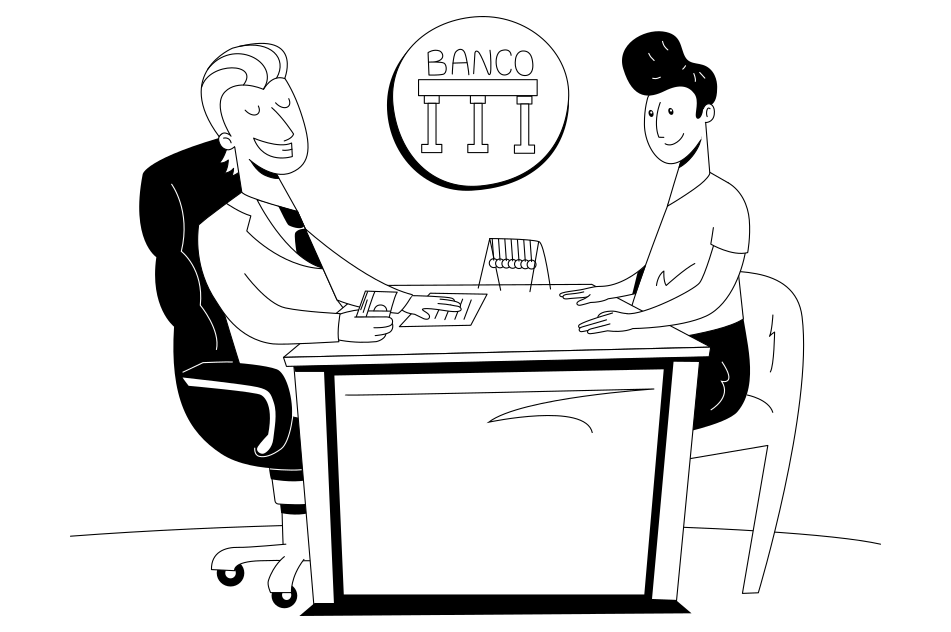
Individuals and companies often need money to fulfil their dreams or projects. This can be obtained by taking out a loan or credit facility with your bank. When you sign, it is essential to understand the details properly to avoid future surprises.
JLA Notarios can be your trusted notary office, giving you accurate advice on loan contracts, providing a very agile and specialised service for processing loan contracts.
Bear in mind that from 9 November 2023, you will be able to sign your loan contracts from anywhere in Spain electronically by videoconference with JLA Notarios, saving you time and money. Do not hesitate to contact us to find out more about the notary office’s services in order to sign a loan contract online or sign a credit facility online.
Companies
Without entrepreneurship there is no future, so it is of vital importance to support our businesspeople and entrepreneurs.
At JLA Notaries we are familiar with companies’ life cycle, which enables us to provide legal assistance for companies in their different stages, whether incorporation, modifications of their articles of association, changes of director, share sales and purchases, capital increases and reductions, dissolution and closure, and everything related to commercial matters.
Powers of attorney
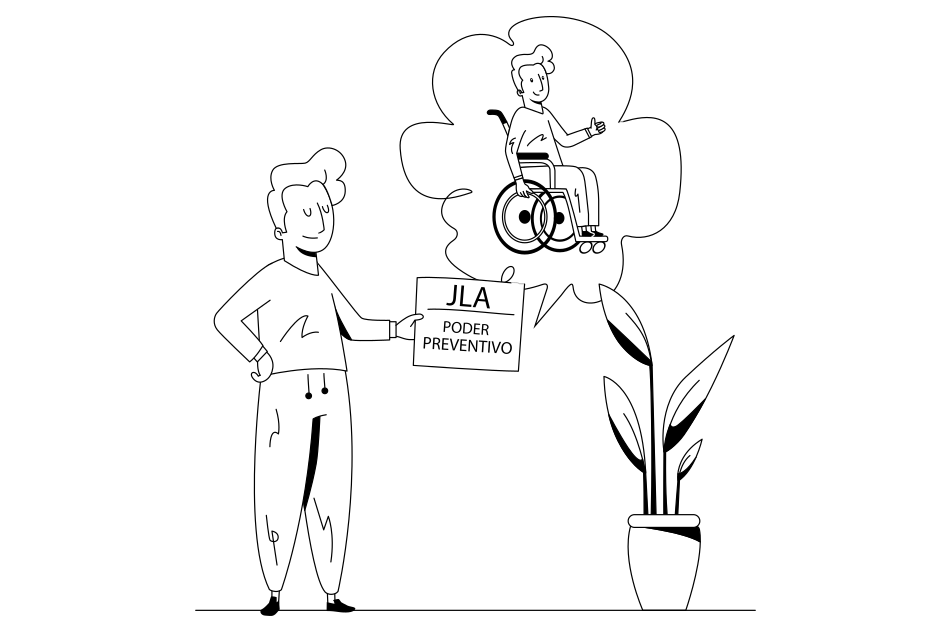
There are moments in life when a person needs to delegate. The law provides a tool for this: powers of attorney. Though a power of attorney, one person allows another person to act on their behalf.
At JLA Notarios we make sure that you understand the significance and risks of delegating or revoking powers of attorney, from a special power of attorney or power of attorney for lawsuits, to general powers of attorney or preventive powers of attorney for cases of incapacity.
We provide an agile service to sign powers of attorney. You can take your copy away immediately, saving you unnecessary trips, and from 9 November 2023 our clients will be able to sign all powers of attorney that are not general or preventive by videoconference through our digital notary office.

Family affairs
A prosperous society is based on the family and its protection. Family Law provides you with the tools to protect your family and its members, so its foundations are solid and its purposes can be achieved.
At JLA Notarios we provide legal advice on marriage or civil partnerships; property aspects of the family through marriage contracts or civil partnership contracts; the moments when the family relationship is ended, in cases such as divorce or separation; and protection of vulnerable people, such as minors or people with modified capacity, through deeds of appointment of guardians or executors or creation of protected assets. We do all of this in a way that makes everyone involved feel equally supported and secure.
Certifications and authentications
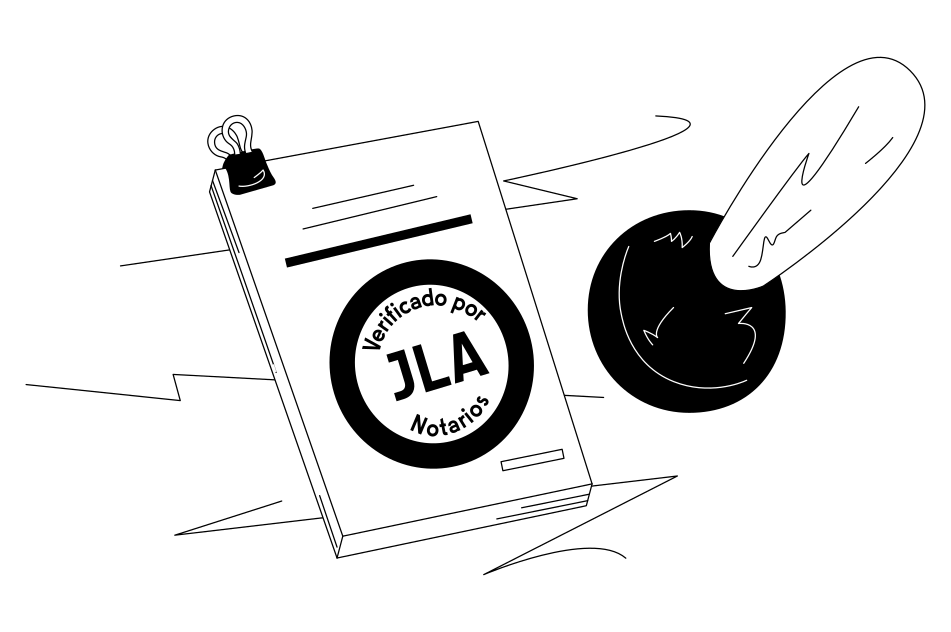
It is common knowledge that notaries attest. That important and simple action can guarantee things of vital importance, such as ensuring that the signature on a document is authentic or certifying that a copy of a document matches the original.
At JLA Notarios we will help you to certify a document or notarise a signature in accordance with the law and tailored to your specific needs.
In addition, these notarial procedures can be carried out conveniently through electronic means from 9 November 2023.
Notarial deeds
How many times have you wanted to record an event, a statement or the status of an object, or to notify someone of an issue. The law provides us with notarial deeds to deal with these matters.
At JLA Notarios we adapt to you, stating in the deed what you need and issuing your notifications and requests.

Oath of citizenship
Behind every oath of citizenship lies a story of overcoming, sacrifice and waiting.
At JLA Notarios we know what this moment means and we provide an empathetic, agile and fast service. We don’t just advise you about the actual swearing-in, but also inform you of the future requirements that new Spanish citizens need to know.
We are your go-to notary’s office to swear the oath of citizenship before a notary public in Barcelona.

Apostille of the hague convention
Globalisation enables the free movement of people and documents of all kinds. How can you guarantee that a document has been officially issued? With an apostille of the Hague Convention.
JLA Notarios can obtain an apostille for all documents executed before us so they are valid and recognised abroad. We do this transparently and save you all the bureaucratic procedures involved.
Tax and registry procedures
Tax bureaucracy can cause a lot of headaches.
So JLA Notarios offers its clients the possibility of assessing and paying the many different taxes by the executing deeds and carrying out other procedures before the notary. We can also file them with the Land or Companies Registry so you do not have to concern yourself with it and can spend your time on the things that matter. We support you from start to finish.
Wills and inheritance
Making a will, making a declaration of heirs or awarding inheritance are very important moments in people’s lives.
At JLA Notarios we offer inheritance law services, both to arrange your estate and to divide up inheritance, guaranteeing the best advice for your particular needs while studying the tax implications of each case. We never forget the human factor. We even offer a notary service at home if necessary.
Contracts and property law
Over the course of our lives, we carry out important actions, such as buying a home, declaring a new-build, lifetime gifting to our children or ending partnerships, among many others.
At JLA Notarios we are experts in property and contract law and buying and selling property. We guide our clients, analysing each particular issue and always considering the tax burden of each transaction.
In addition, some of our notarial services can be performed online, so we can assist you from anywhere in Spain. Contact us to declare a new-build or a commonhold ownership structure online.
Mortgage
Taking out a mortgage is one of the biggest moments for anyone. Just think of the fees and interest you may have to pay for much of your life. So it is essential to have a trusted notary to help you understand what you are signing, explaining the tricky legal terms and their future consequences in simple words, to provide transparency and protect our clients.
At JLA Notarios we are aware of the importance of giving complete and understandable information to people about to sign a mortgage, novation or subrogation. We also advise and guide you on your future mortgage cancellation.
Loan agreements and credit facilities
Individuals and companies often need money to fulfil their dreams or projects. This can be obtained by taking out a loan or credit facility with your bank. When you sign, it is essential to understand the details properly to avoid future surprises.
JLA Notarios can be your trusted notary office, giving you accurate advice on loan contracts, providing a very agile and specialised service for processing loan contracts.
Bear in mind that from 9 November 2023, you will be able to sign your loan contracts from anywhere in Spain electronically by videoconference with JLA Notarios, saving you time and money. Do not hesitate to contact us to find out more about the notary office’s services in order to sign a loan contract online or sign a credit facility online.
Companies
Without entrepreneurship there is no future, so it is of vital importance to support our businesspeople and entrepreneurs.
At JLA Notaries we are familiar with companies’ life cycle, which enables us to provide legal assistance for companies in their different stages, whether incorporation, modifications of their articles of association, changes of director, share sales and purchases, capital increases and reductions, dissolution and closure, and everything related to commercial matters.
Powers of attorney
There are moments in life when a person needs to delegate. The law provides a tool for this: powers of attorney. Though a power of attorney, one person allows another person to act on their behalf.
At JLA Notarios we make sure that you understand the significance and risks of delegating or revoking powers of attorney, from a special power of attorney or power of attorney for lawsuits, to general powers of attorney or preventive powers of attorney for cases of incapacity.
We provide an agile service to sign powers of attorney. You can take your copy away immediately, saving you unnecessary trips, and from 9 November 2023 our clients will be able to sign all powers of attorney that are not general or preventive by videoconference through our digital notary office.
Family affairs
A prosperous society is based on the family and its protection. Family Law provides you with the tools to protect your family and its members, so its foundations are solid and its purposes can be achieved.
At JLA Notarios we provide legal advice on marriage or civil partnerships; property aspects of the family through marriage contracts or civil partnership contracts; the moments when the family relationship is ended, in cases such as divorce or separation; and protection of vulnerable people, such as minors or people with modified capacity, through deeds of appointment of guardians or executors or creation of protected assets. We do all of this in a way that makes everyone involved feel equally supported and secure.
Certifications and authentications
It is common knowledge that notaries attest. That important and simple action can guarantee things of vital importance, such as ensuring that the signature on a document is authentic or certifying that a copy of a document matches the original.
At JLA Notarios we will help you to certify a document or notarise a signature in accordance with the law and tailored to your specific needs.
In addition, these notarial procedures can be carried out conveniently through electronic means from 9 November 2023.
Notarial deeds
How many times have you wanted to record an event, a statement or the status of an object, or to notify someone of an issue. The law provides us with notarial deeds to deal with these matters.
At JLA Notarios we adapt to you, stating in the deed what you need and issuing your notifications and requests.
Oath of citizenship
Behind every oath of citizenship lies a story of overcoming, sacrifice and waiting.
At JLA Notarios we know what this moment means and we provide an empathetic, agile and fast service. We don’t just advise you about the actual swearing-in, but also inform you of the future requirements that new Spanish citizens need to know.
We are your go-to notary’s office to swear the oath of citizenship before a notary public in Barcelona.
Apostille of the hague convention
Globalisation enables the free movement of people and documents of all kinds. How can you guarantee that a document has been officially issued? With an apostille of the Hague Convention.
JLA Notarios can obtain an apostille for all documents executed before us so they are valid and recognised abroad. We do this transparently and save you all the bureaucratic procedures involved.
Tax and registry procedures
Tax bureaucracy can cause a lot of headaches.
So JLA Notarios offers its clients the possibility of assessing and paying the many different taxes by the executing deeds and carrying out other procedures before the notary. We can also file them with the Land or Companies Registry so you do not have to concern yourself with it and can spend your time on the things that matter. We support you from start to finish.


