


Acta de transparencia en Barcelona
Las actas de transparencia o actas previas de transparencia material son un documento notarial con carácter gratuito a la vez que obligatorio que se produce en las notarías antes de la firma de una hipoteca. Como Notarios en Barcelona especializados en hipotecas, queremos explicaros qué son y cómo funcionan, así como el papel diferenciador que juega un Notario durante todo este trámite.
¿Qué es el acta de transparencia material en España?
Cuando solicitamos un préstamo con garantía hipotecaria, uno de los primeros pasos es acudir a una notaría que deberá verificar que se está produciendo todo el proceso con transparencia, con el fin de que el cliente tenga pleno conocimiento de los datos financieros, sus derechos y obligaciones, antes de asumir las importantes consecuencias que la hipoteca conlleva.
Por tanto, se procederá al otorgamiento de una escritura notarial conocido como acta de transparencia o acta previa de transparencia material en el que se constata que la parte que desea contratar un crédito inmobiliario con una entidad bancaria ha sido informada y asesorada debidamente, y que, además, ha recibido la suficiente documentación antes de la contratación de dicho préstamo.
El origen de las actas previas a las hipotecas está en la Ley 5/2019, reguladora de los contratos de crédito inmobiliario, y que quiere solucionar algunos problemas que sucedieron durante la crisis inmobiliaria de 2009, como la falta de conocimiento de algunos clientes o la problemática causada por ciertas cláusulas. Por tanto, antes de esta ley no había actas previas en las hipotecas. El objetivo de esta ley es garantizar que las personas que contratan una hipoteca reciban una información suficiente y comprensible por parte del Notario y la notaría.
En las actas previas el Notario realiza una intervención notarial para asegurarse de que la parte deudora (aquellos clientes de la entidad bancaria que desean contratar el préstamo hipotecario) ha comprendido todos los términos de la hipoteca y suscribe el trámite con una voluntad informada y asesorada de manera correcta.
¿En qué casos se debe firmar el acta previa? El acta de transparencia o acta previa de transparencia material, no debe firmarse en todos los casos, sino en aquello señalados en el artículo 2 de la Ley 5/2019. Según dicho artículo, el acta previa deberá firmarse “cuando el prestatario, el fiador o garante sea una persona física y dicho contrato tenga por objeto:
- La concesión de préstamos con garantía hipotecaria u otro derecho real de garantía sobre un inmueble de uso residencial. A estos efectos, también se entenderán como inmuebles para uso residencial aquellos elementos tales como trasteros, garajes, y cualesquiera otros que sin constituir vivienda como tal cumplen una función doméstica.
- La concesión de préstamos cuya finalidad sea adquirir o conservar derechos de propiedad sobre terrenos o inmuebles construidos o por construir, siempre que el prestatario, el fiador o garante sea un consumidor.”
Por consiguiente, sólo hay acta previa cuando el préstamo lo recibe un particular o, aun cuando reciba el préstamo hipotecario una empresa, hay algún fiador o garante que sea particular, y esta acta previa a la hipoteca (o acta de transparencia material) se produce antes de las firmar la escritura de hipoteca y, en su caso, del otorgamiento escritura de compraventa. El trámite y el otorgamiento del acta previa de transparencia es necesario ya que garantiza que el procedimiento se está ejecutando dentro de la legalidad. Además, protege al consumidor al asegurar que ha entendido el futuro contrato de hipoteca y consecuencias de sus cláusulas, que conoce sus derechos, obligaciones y, sobre todo, las consecuencias en caso de impago de las cuotas del préstamo hipotecario.
La ley que define las operaciones de crédito inmobiliario y normaliza las actas de transparencia material es la Ley 5/2019, de 15 de marzo, reguladora de los contratos de crédito inmobiliario (LCCI). Como hemos anticipado, la LCCI se propuso recuperar la confianza de la población en el sistema bancario y los préstamos hipotecarios. Con esta legislación también se asegura que el futuro deudor conoce y comprende completamente su hipoteca y cierra la posibilidad de reclamaciones judiciales de nulidad.
Acta de transparencia en notaría: el papel de un Notario
Para la firma de un acta previa de hipoteca el cliente básicamente deberá comunicar a su banco la notaría que ha escogido para el trámite y firmar la documentación precontractual, que primero le deberá haber explicado la propia entidad bancaria. Vamos a analizar este trámite paso a paso. Por tanto, si usted quiere tramitar su hipoteca con JLA Notarios debe solicitar a su banco que designe como Notarios de su operación a uno de los Notarios de JLA Notarios, esto es, debe pedir que designe el banco al Notario Luis Alberto Álvarez o al Notario Juan Madridejos Velasco, ya que no se puede asignar directamente a la notaría sino a un notario específico.
A continuación, la entidad bancaria enviará los documentos precontractuales de hipoteca a la notaría. Esto se hace a través de un sistema informático notarial especial que se llama SIGNO. Desde que se cuelguen los documentos hasta la firma de hipoteca deben transcurrir como mínimo 10 días. Sin embargo, en Cataluña existe para el acta de transparencia plazos diferentes al resto de comunidades. Así, en Cataluña, no podrá firmarse la escritura de hipoteca hasta que no sucedan 14 días naturales desde el envío de la documentación, aunque se admite que el cliente que lo desee puede renunciar expresamente a los 4 días de más que exige la normativa catalana, siempre que se respete el mínimo de 10 días, no obstante, algunos bancos exigen que si se renuncia a los 4 días, después de transcurrido el plazo total de 14 días, el cliente declare en escritura que se ratifica en el otorgamiento.
Pero ¿qué sucede durante este período? Una vez recibida la información, el Notario, que es un profesional del Derecho, cumplirá diferentes funciones relacionadas con el acta de transparencia material estipuladas en la Ley de Crédito Inmobiliario.
La primera es valorar la información aportada por la entidad bancaria (artículo 15 de la Ley reguladora de los contratos de crédito inmobiliario). Podemos establecer la relevancia de la entrega de la información ya que los datos que contengan determinarán la contratación o no de la hipoteca por parte del cliente. Se estudiará la documentación siguiente que además deberá ser incluida en el acta:
-
FEIN (Ficha Europea de Información Normalizada): con las condiciones de financiación que tiene carácter vinculante durante un plazo de diez días. Incluye tipo de interés, duración de la hipoteca, cantidad de pagos e importe, bonificaciones, comisiones y consecuencias del impago.
-
FIAE (Ficha de Advertencias Estandarizadas): resume cláusulas y términos relevantes en el contrato (como las posibles consecuencias de la subida del índice de referencia en caso de las hipotecas variables, la activación de la cláusula de vencimiento anticipado por impago de cuotas, las cláusulas de cancelación o la amortización anticipada…)
-
Copia del proyecto del contrato de la escritura hipotecaria para que el futuro deudor pueda leerla con antelación y con detenimiento, así como para que pueda realizar la consulta y análisis de los puntos y cláusulas claves ante Notario.
-
Cuotas periódicas en préstamos de interés estable: deberá figurar el tipo de interés y el pago total al final de la hipoteca. En hipotecas con interés variable se deberá simular posibles escenarios con diferentes tipos de interés.
-
Condiciones de los seguros contratados o productos vinculados ofrecidos por las entidades financieras para mejorar las condiciones del préstamo y sus condiciones. Debe conocer que debe tener siempre un seguro de hogar sobre el inmueble que hipoteca pero que usted puede elegir libremente el proveedor del seguro del hogar, ya que la ley prohíbe al banco obligar a un cliente a contratar el seguro con ellos, aunque sí puede bonificar el tipo de interés.
-
Gastos de la operación hipotecaria futura. Todos los gastos corren a cargo del banco y el Notario debe hacer toda la labor del acta previa a la hipoteca de forma gratuita, sin poder cobrar más que la hipoteca al banco y nada por el acta previa.
-
Documento que acredite que el cliente tiene derecho a asesoramiento notarial antes de la firma de la escritura de hipoteca. Debe saber que la ley establece que la persona que pide la hipoteca es siempre quien elige notario.
La segunda función del Notario es que la información que se entregue sea la dictaminada por la ley y que la ley sea respetada en todos sus términos. La entrega de la documentación previamente a la firma de hipoteca y su comprobación permite cierto margen de maniobra para ultimar cambios justo antes de las firmas finales. Desde que el Notario reciba la documentación vía telemática, podrá preparar las escrituras definitivas a firmar después del acta previa, aprovechando así el tiempo que la ley obliga a esperar desde que se cuelga la documentación.
Así, llegamos al momento en que el Notario citará al deudor para la firma del acta de transparencia dentro del plazo acordado según la ley, y siempre que esté vigente la oferta vinculante del banco.
Documentación para el día del acta previa
El día del acta previa solo deberá llevar el DNI, ya que la notaría ya habrá obtenido la documentación necesaria a través de la entidad bancaria. Si no tiene DNI podrá traer tarjeta de residencia o cédula de su país o pasaporte con NIE.
El resto de documentos estarán en la notaría para explicárselos cuando acuda a firmar acta previa de hipoteca.
El día del acta de transparencia
El día de firma del acta previa de hipoteca, el Notario debe explicarle personalmente la documentación facilitada por el banco, resolverle todas y cada una de sus preguntas, dudas e inquietudes, explicarle sus derechos, sus obligaciones y responsabilidades. Además, es conveniente que si el préstamo hipotecario va a acompañado de una compraventa que se le de una pequeña información de los gastos e impuestos de la compraventa.
Asimismo, el Notario deberá asegurarse de que el deudor entiende las características del préstamo, especialmente de las fichas FEIN Y FIAE, por lo cual se someterá a una pequeña prueba para comprobar su conocimiento el día del acta de transparencia. Esta prueba contiene preguntas relacionadas con el contrato como el capital total financiado, el tipo de interés escogido, las comisiones a pagar o la consecuencia de los impagos… Una deuda bancaria confiere una responsabilidad elevada, así que es importante que el profesional de derecho exponga los riesgos legales, financieros y las posibles consecuencias en los impagos.
No se preocupe con el test, porque es un test de comprensión de los aspectos que previamente le explicó el Notario y cualquier duda se le podrá plantear en ese momento.
Igualmente, el Notario le informará de sus derecho a cancelar anticipadamente el préstamo hipotecario, bien de forma parcial, bien de forma total; de su derecho a cambiar las condiciones o a cambiar de banco si las condiciones del mercado hipotecario cambian durante la vida del préstamo; su obligación de contratar un seguro del hogar en garantía del banco para el caso de incendio, explosión, etc.; o su responsabilidad universal en caso de impago y ejecución de la hipoteca.
En el caso de cumplir con todos los requisitos que exige la ley, se otorga el acta previa de transparencia y la notaría informará a la entidad bancaria de que el proceso sigue adelante con la finalidad de citarlos para la firma de las escrituras.
Y lo más importante de este paso, no se quede con ninguna duda, pregunte todo lo que desee. El Notario le responderá.
Pasos posteriores al acta previa
Una vez concluida el acta de transparencia en notaría, y pasado como mínimo un día, se le citará para la firma de préstamo hipotecario, y de compraventa si hubiera. Siempre teniendo en cuenta que ha de haber transcurrido el plazo establecido por la ley desde que se colgaron los documentos.
Acta de transparencia en hipoteca y plazo
Como hemos comentado, deben haber transcurrido un mínimo de diez días naturales entre la firma de la documentación precontractual junto con el envío de la información a la notaría y la firma de la escritura de préstamo hipotecario (siendo en Cataluña este plazo de catorce días).
Dentro de este período de tiempo debemos incluir el acta de transparencia, que deberá ser firmada por lo menos un día antes de la escritura de préstamo hipotecario.
Si la firma de la escritura es posterior a los diez días, no hay ningún problema, pues lo importante es respetar el plazo mínimo legal, porque es un plazo mínimo pero se puede firmar en cualquier momento posterior al transcurso de este plazo.
Partes del acta de transparencia
- Presentación del Notario con nombre, apellido, lugar y Colegio.
- Información relativa al futuro deudor de hipoteca (nombre, edad, nacionalidad, estado civil, domicilio y documento de identificación).
- Exposición de las partes intervinientes y del contenido.
- Documentación subida al sistema electrónico y designación del sistema utilizado.
- Labores de asesoramiento notarial realizadas.
- Preguntas específicas planteadas por los solicitantes de la hipoteca, si las hay.
- Test de compresión de la documentación que determina la ley.
- Manifestación de cumplimiento de la totalidad de obligaciones legales.
- Cláusula de protección de datos.
- Firma, signo y sello del Notario autorizante del acta.
Más preguntas relacionadas con el acta de transparencia
Es indispensable en préstamos con garantía hipotecaria u otro derecho real sobre un inmueble con uso residencial (vivienda, trastero, garaje, u otro que cumpla función doméstica…) cuando quien recibe el préstamo, o quien avala o afianza, es un particular o consumidor.
En los casos en los que se actúa como profesional o una sociedad, sin que intervengan particulares considerados consumidores, se podrá firmar la hipoteca directamente, sin necesidad de acta previa.
También en préstamos cuyo objetivo es adquirir o conservar derechos de propiedad sobre terrenos o inmuebles siempre que el prestatario sea consumidor.
La ley reguladora de los contratos de crédito inmobiliario establece que el acta de transparencia hipotecaria deberá ser firmada tanto por los futuros deudores como por aquellos que los avalen (fiadores o garantes). También, junto a estas personas, firmará el Notario que les explica toda la documentación.
También deberán firmar aquellas personas que se puedan ver afectadas por la ejecución hipotecaria, o cuando la Ley así lo determina. Por ejemplo, deberán firmar el acta de trasparencia material los hipotecantes no deudores (propietarios de la finca hipotecada pero que no son deudores del banco), o el cónyuge del hipotecante, cuando la hipoteca recae sobre la vivienda habitual.
Será responsabilidad del futuro deudor escoger Notario en estas operaciones relacionadas con la compraventa de un inmueble y financiación hipotecaria. Esto es un derecho que la ley da a quien pide una hipoteca para que pueda elegir un Notario de confianza que le proteja frente al banco y le explique de forma rigurosa el contenido de su hipoteca.
Como hemos indicado al inicio de la descripción de este servicio, el acta previa es gratuita para el cliente.
El pago de la escritura de hipoteca corresponde a la entidad bancaria con la cual se gestiona la financiación, así como los gatos de impuestos, gestoría, notaría e inscripción de la vivienda en el Registro de la Propiedad.
Por tanto, quien pide una hipoteca no paga nada por el acta previa a la hipoteca ni por la hipoteca en sí. Si la hipoteca va acompañada de una compraventa, sí tendrá que pagar los gastos de la compraventa, que estarán dentro de la provisión que su banco le dará.
En el caso en el que cambie de banco, y se cancele la hipoteca del primer banco y se constituya una nueva en otro banco, usted tampoco tendrá que abonar los gastos de constitución de hipoteca, pero sí los gastos de notaría, registro y gestión de la cancelación de la hipoteca de su antiguo banco.
Por último, tenga en cuenta que la gestión y tramitación, tanto de los impuestos, como de la inscripción en el Registro de la Propiedad, lo llevará a cabo la propia gestoría del banco, sin que el cliente pueda elegir sobre este punto.
Las consultas más comunes suelen relacionarse con los intereses y la correspondiente diferenciación entre los intereses ordinarios y los de demora, con el índice de referencia, los tipos de interés, las comisiones o el valor de tasación en caso de subasta.
Con este nombre nos referimos a la autorización notarial del acta previa de hipoteca. Por tanto, es el acta que cumple todos los requisitos legales y que ya ha sido firmada por las partes y el Notario. Este acta de transparencia con resultado positivo acredita que la información aportada por la entidad financiera es correcta, que el cliente ha sido informado y asesorado, además de haber superado correctamente la prueba y muestra conocimientos sobre las cláusulas. El acta de transparencia positiva se comunicará al banco para que envíe los documentos que sean necesarios para la firma definitiva de la hipoteca.
También puede suceder la no autorización de dicha acta. En consecuencia, no se producirá la compraventa ni el préstamo en las condiciones expuestas, por lo que se necesitará renegociar los términos.
Puede ser que el interesado no se presente porque no va a firmar la escritura, y por lo tanto se procederá al cierre de acta. También se produce un cierre de acta cuando no está autorizada el acta de transparencia.
Se podrá otorgar un poder especial para utilizar a un apoderado en el acta de transparencia. Solicite un otorgamiento de poder especial online con nosotros.
JLA Notarios: acta de transparencia en Notaría
Nuestra Notaría en Barcelona dispone de un equipo de Notarios altamente calificados y experimentados para poder otorgar el acta de transparencia. Somos expertos en las regulaciones que se aplican y le podemos ofrecer un asesoramiento personalizado en el que nos ajustamos a sus necesidades específicas, respondiendo en todo momento a sus preguntas y preocupaciones.
Desde JLA Notarios estamos especializados en firmas de hipotecas, actas previas a las hipotecas y compraventas. Podemos tramitar estas operaciones siempre y cuando pueda venir a firmar de forma presencial con nuestros Notarios en la Avenida Diagonal de Barcelona.
Póngase en contacto con nosotros para una consulta inicial, ya sea para autorizar un apoderamiento general mercantil u otros asuntos que le afecten. Le ayudaremos a través de todo el proceso, resolviendo sus dudas y gestionando con eficiencia su gestión. Reserve ahora su primera asesoría en JLA Notarios.
By your side in the moments that matter

Wills and inheritance
Making a will, making a declaration of heirs or awarding inheritance are very important moments in people’s lives.
At JLA Notarios we offer inheritance law services, both to arrange your estate and to divide up inheritance, guaranteeing the best advice for your particular needs while studying the tax implications of each case. We never forget the human factor. We even offer a notary service at home if necessary.
Contracts and property law
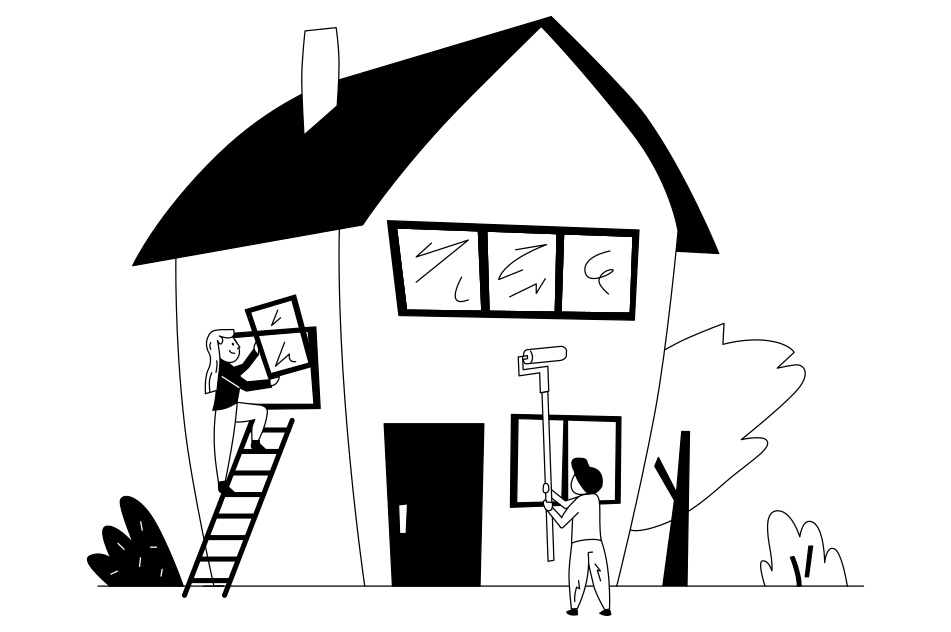
Over the course of our lives, we carry out important actions, such as buying a home, declaring a new-build, lifetime gifting to our children or ending partnerships, among many others.
At JLA Notarios we are experts in property and contract law and buying and selling property. We guide our clients, analysing each particular issue and always considering the tax burden of each transaction.
In addition, some of our notarial services can be performed online, so we can assist you from anywhere in Spain. Contact us to declare a new-build or a commonhold ownership structure online.

Mortgage
Taking out a mortgage is one of the biggest moments for anyone. Just think of the fees and interest you may have to pay for much of your life. So it is essential to have a trusted notary to help you understand what you are signing, explaining the tricky legal terms and their future consequences in simple words, to provide transparency and protect our clients.
At JLA Notarios we are aware of the importance of giving complete and understandable information to people about to sign a mortgage, novation or subrogation. We also advise and guide you on your future mortgage cancellation.
Loan agreements and credit facilities
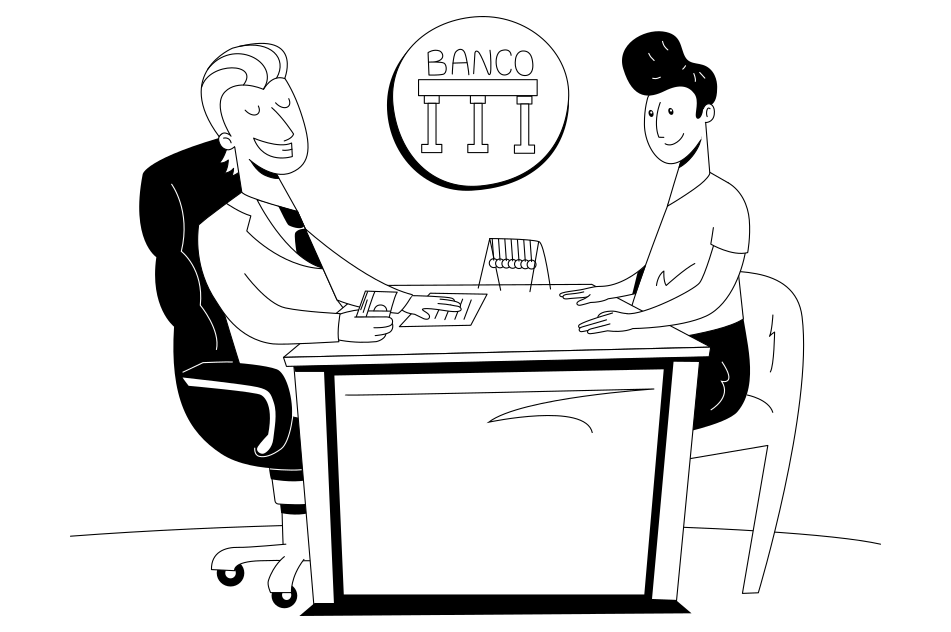
Individuals and companies often need money to fulfil their dreams or projects. This can be obtained by taking out a loan or credit facility with your bank. When you sign, it is essential to understand the details properly to avoid future surprises.
JLA Notarios can be your trusted notary office, giving you accurate advice on loan contracts, providing a very agile and specialised service for processing loan contracts.
Bear in mind that from 9 November 2023, you will be able to sign your loan contracts from anywhere in Spain electronically by videoconference with JLA Notarios, saving you time and money. Do not hesitate to contact us to find out more about the notary office’s services in order to sign a loan contract online or sign a credit facility online.
Companies
Without entrepreneurship there is no future, so it is of vital importance to support our businesspeople and entrepreneurs.
At JLA Notaries we are familiar with companies’ life cycle, which enables us to provide legal assistance for companies in their different stages, whether incorporation, modifications of their articles of association, changes of director, share sales and purchases, capital increases and reductions, dissolution and closure, and everything related to commercial matters.
Powers of attorney
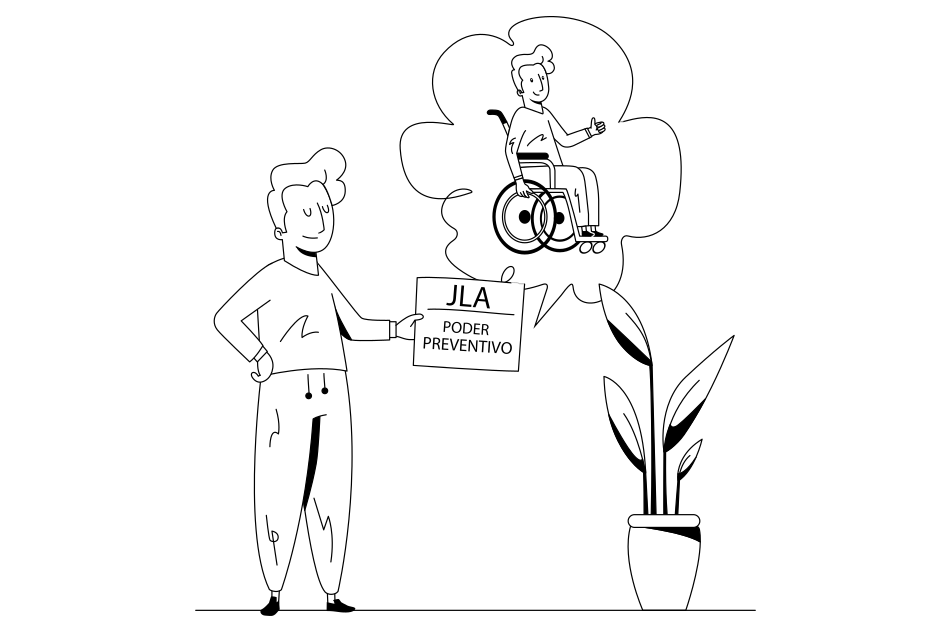
There are moments in life when a person needs to delegate. The law provides a tool for this: powers of attorney. Though a power of attorney, one person allows another person to act on their behalf.
At JLA Notarios we make sure that you understand the significance and risks of delegating or revoking powers of attorney, from a special power of attorney or power of attorney for lawsuits, to general powers of attorney or preventive powers of attorney for cases of incapacity.
We provide an agile service to sign powers of attorney. You can take your copy away immediately, saving you unnecessary trips, and from 9 November 2023 our clients will be able to sign all powers of attorney that are not general or preventive by videoconference through our digital notary office.

Family affairs
A prosperous society is based on the family and its protection. Family Law provides you with the tools to protect your family and its members, so its foundations are solid and its purposes can be achieved.
At JLA Notarios we provide legal advice on marriage or civil partnerships; property aspects of the family through marriage contracts or civil partnership contracts; the moments when the family relationship is ended, in cases such as divorce or separation; and protection of vulnerable people, such as minors or people with modified capacity, through deeds of appointment of guardians or executors or creation of protected assets. We do all of this in a way that makes everyone involved feel equally supported and secure.
Certifications and authentications
It is common knowledge that notaries attest. That important and simple action can guarantee things of vital importance, such as ensuring that the signature on a document is authentic or certifying that a copy of a document matches the original.
At JLA Notarios we will help you to certify a document or notarise a signature in accordance with the law and tailored to your specific needs.
In addition, these notarial procedures can be carried out conveniently through electronic means from 9 November 2023.
Notarial deeds
How many times have you wanted to record an event, a statement or the status of an object, or to notify someone of an issue. The law provides us with notarial deeds to deal with these matters.
At JLA Notarios we adapt to you, stating in the deed what you need and issuing your notifications and requests.

Oath of citizenship
Behind every oath of citizenship lies a story of overcoming, sacrifice and waiting.
At JLA Notarios we know what this moment means and we provide an empathetic, agile and fast service. We don’t just advise you about the actual swearing-in, but also inform you of the future requirements that new Spanish citizens need to know.
We are your go-to notary’s office to swear the oath of citizenship before a notary public in Barcelona.

Apostille of the hague convention
Globalisation enables the free movement of people and documents of all kinds. How can you guarantee that a document has been officially issued? With an apostille of the Hague Convention.
JLA Notarios can obtain an apostille for all documents executed before us so they are valid and recognised abroad. We do this transparently and save you all the bureaucratic procedures involved.
Tax and registry procedures
Tax bureaucracy can cause a lot of headaches.
So JLA Notarios offers its clients the possibility of assessing and paying the many different taxes by the executing deeds and carrying out other procedures before the notary. We can also file them with the Land or Companies Registry so you do not have to concern yourself with it and can spend your time on the things that matter. We support you from start to finish.
Wills and inheritance
Making a will, making a declaration of heirs or awarding inheritance are very important moments in people’s lives.
At JLA Notarios we offer inheritance law services, both to arrange your estate and to divide up inheritance, guaranteeing the best advice for your particular needs while studying the tax implications of each case. We never forget the human factor. We even offer a notary service at home if necessary.
Contracts and property law
Over the course of our lives, we carry out important actions, such as buying a home, declaring a new-build, lifetime gifting to our children or ending partnerships, among many others.
At JLA Notarios we are experts in property and contract law and buying and selling property. We guide our clients, analysing each particular issue and always considering the tax burden of each transaction.
In addition, some of our notarial services can be performed online, so we can assist you from anywhere in Spain. Contact us to declare a new-build or a commonhold ownership structure online.
Mortgage
Taking out a mortgage is one of the biggest moments for anyone. Just think of the fees and interest you may have to pay for much of your life. So it is essential to have a trusted notary to help you understand what you are signing, explaining the tricky legal terms and their future consequences in simple words, to provide transparency and protect our clients.
At JLA Notarios we are aware of the importance of giving complete and understandable information to people about to sign a mortgage, novation or subrogation. We also advise and guide you on your future mortgage cancellation.
Loan agreements and credit facilities
Individuals and companies often need money to fulfil their dreams or projects. This can be obtained by taking out a loan or credit facility with your bank. When you sign, it is essential to understand the details properly to avoid future surprises.
JLA Notarios can be your trusted notary office, giving you accurate advice on loan contracts, providing a very agile and specialised service for processing loan contracts.
Bear in mind that from 9 November 2023, you will be able to sign your loan contracts from anywhere in Spain electronically by videoconference with JLA Notarios, saving you time and money. Do not hesitate to contact us to find out more about the notary office’s services in order to sign a loan contract online or sign a credit facility online.
Companies
Without entrepreneurship there is no future, so it is of vital importance to support our businesspeople and entrepreneurs.
At JLA Notaries we are familiar with companies’ life cycle, which enables us to provide legal assistance for companies in their different stages, whether incorporation, modifications of their articles of association, changes of director, share sales and purchases, capital increases and reductions, dissolution and closure, and everything related to commercial matters.
Powers of attorney
There are moments in life when a person needs to delegate. The law provides a tool for this: powers of attorney. Though a power of attorney, one person allows another person to act on their behalf.
At JLA Notarios we make sure that you understand the significance and risks of delegating or revoking powers of attorney, from a special power of attorney or power of attorney for lawsuits, to general powers of attorney or preventive powers of attorney for cases of incapacity.
We provide an agile service to sign powers of attorney. You can take your copy away immediately, saving you unnecessary trips, and from 9 November 2023 our clients will be able to sign all powers of attorney that are not general or preventive by videoconference through our digital notary office.
Family affairs
A prosperous society is based on the family and its protection. Family Law provides you with the tools to protect your family and its members, so its foundations are solid and its purposes can be achieved.
At JLA Notarios we provide legal advice on marriage or civil partnerships; property aspects of the family through marriage contracts or civil partnership contracts; the moments when the family relationship is ended, in cases such as divorce or separation; and protection of vulnerable people, such as minors or people with modified capacity, through deeds of appointment of guardians or executors or creation of protected assets. We do all of this in a way that makes everyone involved feel equally supported and secure.
Certifications and authentications
It is common knowledge that notaries attest. That important and simple action can guarantee things of vital importance, such as ensuring that the signature on a document is authentic or certifying that a copy of a document matches the original.
At JLA Notarios we will help you to certify a document or notarise a signature in accordance with the law and tailored to your specific needs.
In addition, these notarial procedures can be carried out conveniently through electronic means from 9 November 2023.
Notarial deeds
How many times have you wanted to record an event, a statement or the status of an object, or to notify someone of an issue. The law provides us with notarial deeds to deal with these matters.
At JLA Notarios we adapt to you, stating in the deed what you need and issuing your notifications and requests.
Oath of citizenship
Behind every oath of citizenship lies a story of overcoming, sacrifice and waiting.
At JLA Notarios we know what this moment means and we provide an empathetic, agile and fast service. We don’t just advise you about the actual swearing-in, but also inform you of the future requirements that new Spanish citizens need to know.
We are your go-to notary’s office to swear the oath of citizenship before a notary public in Barcelona.
Apostille of the hague convention
Globalisation enables the free movement of people and documents of all kinds. How can you guarantee that a document has been officially issued? With an apostille of the Hague Convention.
JLA Notarios can obtain an apostille for all documents executed before us so they are valid and recognised abroad. We do this transparently and save you all the bureaucratic procedures involved.
Tax and registry procedures
Tax bureaucracy can cause a lot of headaches.
So JLA Notarios offers its clients the possibility of assessing and paying the many different taxes by the executing deeds and carrying out other procedures before the notary. We can also file them with the Land or Companies Registry so you do not have to concern yourself with it and can spend your time on the things that matter. We support you from start to finish.


