


Formalizar una pareja de hecho en Barcelona
Si después de pasar un tiempo con su pareja desea formalizar su relación sentimental, podemos oficializar su relación como pareja de hecho en Barcelona, desde la notaría JLA Notarios. Como Notarios en Barcelona especializados en servicios familiares, queremos explicarle las ventajas y beneficios de una pareja de hecho, sus derechos y todo el proceso para conseguir la escritura de constitución de su unión de hecho.
¿Qué es una pareja de hecho?
Independientemente de la edad o del género de los miembros, cuando una pareja desea formalizar su relación puede optar por el matrimonio o por otras formas de institución jurídica como ser pareja de hecho (también conocido como pareja estable o unión de hecho). Para el Derecho, tanto los matrimonio, como las parejas de hecho, son consideradas familias, si bien son distintos los requisitos de constitución de uno y otro modelo familiar, siendo más complejo y lento constituir un matrimonio.
Sin embargo, en España no existe una regulación estatal para la pareja de hecho, siendo hoy en día la mayoría de las Comunidades Autónomas quienes han promulgado disposiciones jurídicas. Así, la regulación a tener en cuenta es la propia de la Comunidad Autónoma en la que vive la pareja de hecho. Y hay que saber, por ello, que hay cierta diferencia en la regulación y tratamiento que reciben las parejas de hecho en las distintas Comunidades autónomas.
Esto provoca que en cada territorio existan ciertas diferencias y particularidades que hay que conocer. No obstante, como punto de partida es común que una de las vías para la constitución de pareja de hecho sea ante Notario y dicha formalización tiene validez en toda España.
¿Qué es ser pareja de hecho en Cataluña?
En el caso de Cataluña, se regula la pareja de hecho en el Libro Segundo del Código Civil Catalán, Título III, en el capítulo IV llamado “convivencia estable en pareja”. Además, su regulación es completada con otros decretos y órdenes que ordenan la situación.
La ventaja de constituir pareja de hecho en Cataluña es que esta comunidad autónoma no exige periodo mínimo de convivencia de la pareja para su registro, y presume que existe la pareja en caso hayan convido juntos durante dos años ininterrumpidos o si tienen un hijo común. El problema en este caso es que para que produzca efectos frente a terceros, especialmente frente a la administración, deberá inscribirse en el Registro de parejas estables de Cataluña.
Pareja de hecho y requisitos
Si quiere constituir pareja de hecho ante Notario, tendrá que pedir cita en la notaría y acudir los dos miembros de la pareja a la notaría a firmar escritura de constitución de pareja de hecho ante Notario. La firma de la escritura de unión de hecho deberá hacerse presencialmente en la notaría.
Además de acudir a la firma de la pareja de hecho, desde la notaría le pedirán que acredite la realidad de su pareja de hecho, con documentos, como el padrón municipal en el que conste que los contrayentes de la unión de hecho están domiciliados en el mismo domicilio, o mediante testigos.
Además, según los casos y territorios, puede haber más requerimientos, como que el padrón tenga una determinada antigüedad o que acudan testigos a la firma que manifiesten conocer la realidad de su pareja. También, lo más probable es que el personal de la notaría y el notario hagan preguntas de seguridad que garanticen la realidad de su unión de hecho.
Además, si el Notario y los constituyentes de la unión no hablan el mismo idioma, deberá acudir un traductor a la firma de la pareja de hecho. El traductor no tiene que ser oficial y es elegido por los integrantes de la pareja de hecho.
Derechos de la pareja de hecho
Si tienes una relación formal es posible que te plantees cuáles son los derechos que obtendrías siendo pareja de hecho. Centrándonos en los derechos que tienen las parejas de hecho en Cataluña, hay que saber que la idea general es que las parejas de hecho tienen un trato prácticamente igual que los matrimonios. Los derechos de las parejas de hecho en Cataluña son los siguientes:
- Mismo tratamiento fiscal que un matrimonio en la mayoría de los casos, con exenciones en transmisiones entre cónyuges.
- Llamamiento a la sucesión intestada de su pareja de hecho, después que los hijos, y solo en defecto de testamento en que se designe heredero a otra persona.
- Conciliación de la vida laboral con la familiar.
- Posible subrogación en el contrato del alquiler de la pareja.
- Acceso a adopciones de menores.
- Indemnizaciones por fallecimiento del otro miembro de la pareja provocada por terceros.
- Permisos retribuidos en caso de accidente, enfermedad o fallecimiento de su pareja.
- Posibilidad de recibir pensiones de viudedad, en los casos en que correspondiera
- Otros beneficios fiscales en materia tributaria.
- Obtención de 15 días naturales al registrarse como Pareja de hecho (debido al decreto-ley 5/2023).
- Derecho al ajuar de la vivienda.
- La necesidad de autorización del otro miembro de la pareja para la venta de la vivienda familiar.
Pareja de hecho con extranjero: unión de hecho en Barcelona
Los extranjeros residentes en Cataluña también podrán establecerse en pareja de hecho, sin ser necesario que un miembro de la pareja sea catalán o español.
Además, si uno de los miembros tiene nacionalidad española, se podrá solicitar la tarjeta de residencia de familiar de ciudadano de la Unión Europea y se obtendrá acceso a la asistencia sanitaria de la Seguridad Social como beneficiario, cumpliendo los requisitos de inmigración y a través del correspondiente expediente administrativo.
¿Cómo hacerse pareja de hecho en Barcelona?
Si quiere constituir pareja de hecho y firmar presencialmente en Barcelona puede acudir a un Notario y formalizar una escritura pública.
Muchas personas tienen la duda de dónde y cómo hacerse pareja de hecho en Barcelona. Póngase en contacto con nuestra Notaría en Barcelona y le resolveremos todas las dudas que tenga al respeto.
Certificado de pareja de hecho Cataluña
La vía notarial constituye la forma más rápida para formalizar una pareja de hecho.
Pida cita, y en el día acordado sólo deberá acudir usted y su pareja. Eso sí, deberá aportar antes la documentación para hacerse pareja de hecho y firmar presencialmente la escritura. Una de las preguntas más comunes por nuestros clientes es la referente a “¿cuándo eres pareja de hecho?”. Se considera la firma de la escritura como el momento de su constitución.
Después de la firma de la escritura de pareja de hecho, desde la notaría enviaremos al Registro de uniones estables de Cataluña una copia de su pareja de hecho. Este Registro, tras la inscripción de su pareja, le enviará a su mail un certificado acreditativo de la inscripción de su pareja en el Registro Civil. Aunque ya se constituye la pareja de hecho desde la firma de la escritura en notaría, este certificado que acredita la inscripción en el Registro puede ser un documento importante, pues debe presentarse en la mayoría de los procesos de inmigración como documento adjunto.
El papel del Notario en una unión de hecho
El Notario es el encargado de redactar la escritura pública de la unión de hecho en la que ambos miembros reconocen convivir y en la que acuerdan constituir una unión estable.
Además, el personal de la notaría y el notario le explicará las posibilidades que tienen para regular su economía (como la elección de un régimen económico común) y les asesorará en cuestiones relacionadas con la sucesión o con la descendencia.
Asimismo, debe saber que es recomendable pactar las consecuencias del cese de convivencia. Si fuera necesario en el futuro la separación de la pareja, el Notario también puede tramitar la escritura pública de disolución de pareja de hecho.
Entre las ventajas que ofrece este trámite de pareja de hecho ante notario encontramos la asesoría, la legalidad y la fe pública que otorga la figura notarial junto con la velocidad del trámite notarial.
Tenga en cuenta que solo podrá constituir este acto de pareja de hecho acudiendo a firmar presencialmente en la notaría que usted elija. Si busca una notaría en Barcelona para una unión de hecho no dude en contactarnos.
Documentación para ser pareja de hecho
Los documentos que debe proporcionar a la notaría para la firma de escritura de pareja de hecho son, como mínimo, los siguientes:
- Documento identificativo en vigor: DNI de los miembros de la pareja, pasaporte o tarjeta de residencia si fuera extranjero
- Certificado de empadronamiento (a excepción de que la pareja tenga un hijo en común, con lo que simplemente el Libro de Familia o el Certificado de nacimiento de los niños bastaría)
Pactos de previsión de ruptura en la escritura de pareja de hecho
En Cataluña se puede pactar los efectos que ocurrirían tras el cese de vida en pareja en la escritura pública de pareja de hecho. Se recomienda su tramitación junto a la escritura de pareja de hecho, para establecer las consecuencias jurídicas de la ruptura y ahorrar conflictos en materia personal y patrimonial. Son materia común en los pactos de previsión de ruptura tanto los hijos menores como el uso de la vivienda.
Entre los pactos, lo más frecuente es pactar un régimen de separación de bienes, que garantiza que cada miembro de la familia tenga bienes separados y autonomía financiera. También, es muy frecuente renunciar a compensaciones y pensiones entre los miembros de una pareja tras la ruptura de la pareja estable.
Más preguntas relacionadas con la unión de hecho o pareja estable
Las parejas de hecho tienen diversos sinónimos con los que son denominadas tanto por la ciudadanía como por la ley, que en ocasiones utiliza distintos términos al referirse a las parejas de hecho. Así, son sinónimos de parejas de hecho los términos unión de hecho, pareja estable y unión estable.
En este caso, si se ha formado parte de una pareja de hecho y se queda viudo, deberá documentar una convivencia ininterrumpida mayor a 5 años, acreditándola ante Notario o en el Registro de Parejas estables. Además, el fallecido deberá tener 500 días cotizados en los últimos 5 años o haber cotizado durante 15 años. Si cumple estos requisitos y los demás establecidos en la normativa autonómica, puede tener derecho a pensión de viudedad.
No pueden ser pareja de hecho los menores de edad que no se hayan emancipado y no pueden hacer pareja de hecho entre sí los parientes en línea recta ni colateral (en segundo grado). Tampoco se admite que constituyan pareja de hecho los casados y no separados de hecho o las personas que convivan como pareja con otras personas.
Según el Código Civil de Cataluña, las personas casada y separadas de hecho, es decir, que ya no conviven con su cónyuge, auqnue no hayan obtenido ni tramitado la separación judicial o el divorcio SÍ pueden constituir pareja de hecho con una tercera persona.
La unión de hecho se disolverá si la pareja cesa de convivir, cuando se decida por voluntad o por fallecimiento de un miembro de la pareja, por acuerdo formalizado en escritura o por notificación fehaciente de uno de los convivientes al otro.
Por tanto, si quiere constatar de forma veraz y rápida la disolución de su pareja de hecho, puede hacerlo ante notario firmando escritura de disolución de pareja de hecho. Para la firma, bastará que acuda uno de los integrantes de la pareja de hecho y desde la notaría nos podemos encargar de todos los trámites posteriores, incluyendo la inscripción de la ruptura de la pareja de hecho en el Registro.
No, según el criterio seguido actualmente por la Hacienda Pública. Esto implica que no podrán tributar conjuntamente por el IRPF y perderían los beneficios fiscales que hubieran podido obtener siendo matrimonio. No obstante, debe saber que salvo en casos concretos se suele pagar más haciendo la declaración de forma conjunta que separada.
Si queremos comparar la pareja de hecho versus el matrimonio, existen diferentes puntos en los que difieren los dos tipos de compromiso.
En cuanto al régimen económico, el matrimonio está definido legalmente, prevaleciendo el régimen pactado por los cónyuges ante Notario en escritura de capitulaciones matrimoniales. En defecto de pacto, se aplicaría el régimen económico matrimonial supletorio, siendo el régimen supletorio el de gananciales en el Derecho común y el de separación de bienes en el Derecho catalán. En el caso de pareja de hecho no existe régimen matrimonial, prevaleciendo la voluntad pactada en capitulaciones.
En cuanto a las herencias, en caso de matrimonio, los cónyuges son llamadas a la sucesión intestada en el Derecho común español y en los distintos Derechos forales. Por su parte, los integrantes de una pareja de hecho no son llamadas a la sucesión intestada; pero, en Cataluña, sí hay llamamiento intestado a favor de la pareja de hecho.
Asimismo, en materia de donaciones, la pareja de hecho no cuenta con exenciones fiscales autonómicas mientras que el matrimonio sí.
Por último, en caso de fallecimiento, la determinación de si las parejas de hecho tienen pensión de viudedad depende de la regulación de la Comunidad Autónoma, mientras que en el matrimonio se puede solicitar la pensión compensatoria o de viudedad en todas las Comunidades Autónomas.
Si nos preguntas si estar en pareja de hecho es igual a estar casado, la respuesta es que hay una tendencia a equiparar ambas situaciones, aunque todavía no son tratadas de forma totalmente igual por la ley. Además, siempre hay que tener en cuenta la normativa de cada Comunidad Autónoma para conocer la situación jurídica de las parejas de hecho. Sí podemos afirmar, respecto a las parejas de hecho regidas por la normativa catalana, que actualmente la regulación de Cataluña es una de las que más derechos reconoce a los integrantes de las parejas de hecho.
Una de las principales ventajas de hacerse pareja de hecho respeto al matrimonio es que el trámite de constitución ante Notario es mucho más. El día de la cita, si has enviado todos los documentos necesarios y la pareja de hecho es de verdad, firmarás escritura de pareja de hecho y recibirás una copia de la escritura.
Tras ello, desde la notaría se enviará copia al Registro de parejas de hecho, que inscribirá la pareja y enviará un resguardo de la inscripción al mail que se haya reflejado en la escritura de unión de hecho.
Precio de pareja de hecho ante Notario
El coste de tramitar una escritura de pareja de hecho ante Notario está determinado por el Arancel Notarial (RD 1426/1989, de 17 de noviembre, por el que se regula el Arancel de los Notarios), el número de folios, las copias autorizadas y simples para los interesados, así como la gestión de copia electrónica para el Registro de parejas estables.
De forma general, hay que tener en cuenta que el precio exacto de un documento notarial no puede calcularse hasta que se conoce su contenido concreto, es decir, hasta que esté firmado, pues son muchas las circunstancias que lo pueden hacer variar. El número de copias que se pide de un documento, los folios que contiene además de posibles cambios o añadidos pueden variar ligeramente el precio final.
Si desea recibir un presupuesto detallado sin compromiso, le invitamos a contactarnos directamente por la vía que le resulte más conveniente. Lo puede hacer a través del formulario de contacto de la página principal de esta web, mediante la sección contactar que encontrará en el pie de página de la web, usando el acceso directo a WhatsApp en la parte inferior derecha de esta página, enviando un correo electrónico a bcn@jlanotarios.com o llamándonos al teléfono 93 159 17 62.
De forma orientativa, le podemos adelantar que, de acuerdo a la normativa reguladora vigente, el precio habitual de un Notario para la formalización de una pareja de hecho es de entre 150 y 270€, incluyendo IVA.
Este precio indicativo está calculado para un documento de contenido habitual (7 folios) y con la expedición de una única copia autorizada, una copia simple y una copia electrónica para el Registro de Parejas Estables.
Formalizar una pareja de hecho en Barcelona con JLA Notarios
Nuestra Notaría en Barcelona dispone de un equipo de Notarios altamente calificados y experimentados para poder tramitar su escritura como pareja de hecho en Barcelona. Somos expertos en las regulaciones que se aplican y le podemos ofrecer un asesoramiento personalizado en el que nos ajustamos a sus necesidades específicas, respondiendo en todo momento a sus preguntas y preocupaciones.
Sí será necesario para tramitar su pareja de hecho en Barcelona que venga a firmar presencialmente su escritura a las oficinas de JLA Notarios, situadas en nuestra notaría en la Avenida Diagonal de Barcelona.
Póngase en contacto con nosotros para una consulta inicial. Le ayudaremos a través de todo el proceso, resolviendo sus dudas y gestionando con eficiencia su gestión. Reserve ahora su primera asesoría en JLA Notarios.
By your side in the moments that matter
Wills and inheritance
Making a will, making a declaration of heirs or awarding inheritance are very important moments in people’s lives.
At JLA Notarios we offer inheritance law services, both to arrange your estate and to divide up inheritance, guaranteeing the best advice for your particular needs while studying the tax implications of each case. We never forget the human factor. We even offer a notary service at home if necessary.
Contracts and property law
Over the course of our lives, we carry out important actions, such as buying a home, declaring a new-build, lifetime gifting to our children or ending partnerships, among many others.
At JLA Notarios we are experts in property and contract law and buying and selling property. We guide our clients, analysing each particular issue and always considering the tax burden of each transaction.
In addition, some of our notarial services can be performed online, so we can assist you from anywhere in Spain. Contact us to declare a new-build or a commonhold ownership structure online.

Mortgage
Taking out a mortgage is one of the biggest moments for anyone. Just think of the fees and interest you may have to pay for much of your life. So it is essential to have a trusted notary to help you understand what you are signing, explaining the tricky legal terms and their future consequences in simple words, to provide transparency and protect our clients.
At JLA Notarios we are aware of the importance of giving complete and understandable information to people about to sign a mortgage, novation or subrogation. We also advise and guide you on your future mortgage cancellation.
Loan agreements and credit facilities
Individuals and companies often need money to fulfil their dreams or projects. This can be obtained by taking out a loan or credit facility with your bank. When you sign, it is essential to understand the details properly to avoid future surprises.
JLA Notarios can be your trusted notary office, giving you accurate advice on loan contracts, providing a very agile and specialised service for processing loan contracts.
Bear in mind that from 9 November 2023, you will be able to sign your loan contracts from anywhere in Spain electronically by videoconference with JLA Notarios, saving you time and money. Do not hesitate to contact us to find out more about the notary office’s services in order to sign a loan contract online or sign a credit facility online.
Companies
Without entrepreneurship there is no future, so it is of vital importance to support our businesspeople and entrepreneurs.
At JLA Notaries we are familiar with companies’ life cycle, which enables us to provide legal assistance for companies in their different stages, whether incorporation, modifications of their articles of association, changes of director, share sales and purchases, capital increases and reductions, dissolution and closure, and everything related to commercial matters.
Powers of attorney
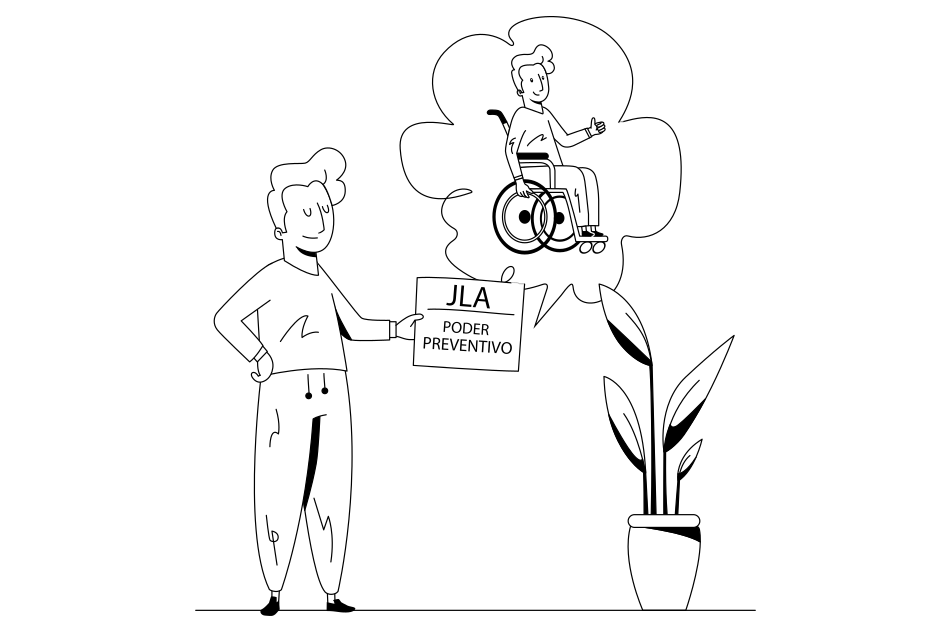
There are moments in life when a person needs to delegate. The law provides a tool for this: powers of attorney. Though a power of attorney, one person allows another person to act on their behalf.
At JLA Notarios we make sure that you understand the significance and risks of delegating or revoking powers of attorney, from a special power of attorney or power of attorney for lawsuits, to general powers of attorney or preventive powers of attorney for cases of incapacity.
We provide an agile service to sign powers of attorney. You can take your copy away immediately, saving you unnecessary trips, and from 9 November 2023 our clients will be able to sign all powers of attorney that are not general or preventive by videoconference through our digital notary office.
Family affairs
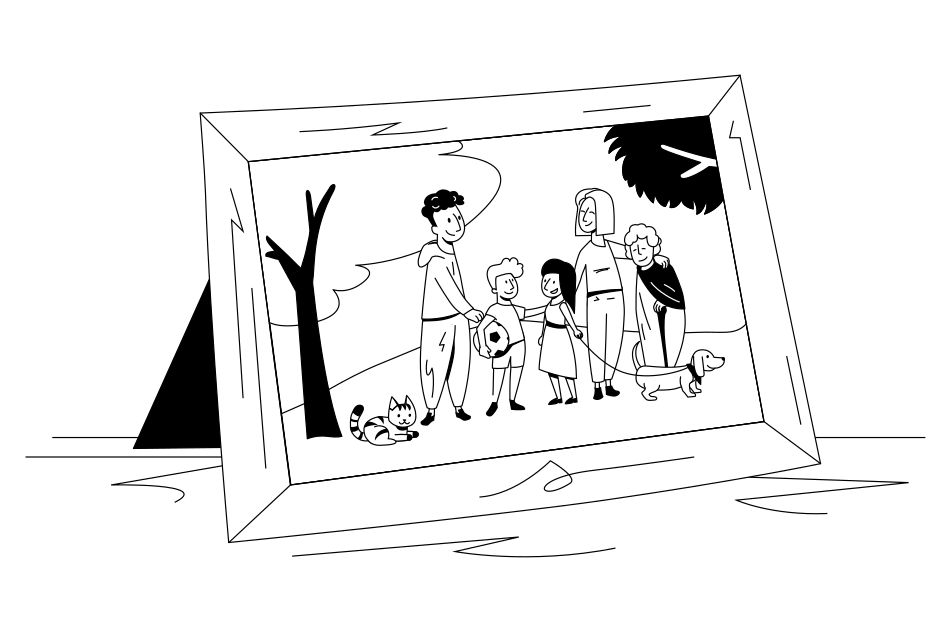
A prosperous society is based on the family and its protection. Family Law provides you with the tools to protect your family and its members, so its foundations are solid and its purposes can be achieved.
At JLA Notarios we provide legal advice on marriage or civil partnerships; property aspects of the family through marriage contracts or civil partnership contracts; the moments when the family relationship is ended, in cases such as divorce or separation; and protection of vulnerable people, such as minors or people with modified capacity, through deeds of appointment of guardians or executors or creation of protected assets. We do all of this in a way that makes everyone involved feel equally supported and secure.
Certifications and authentications
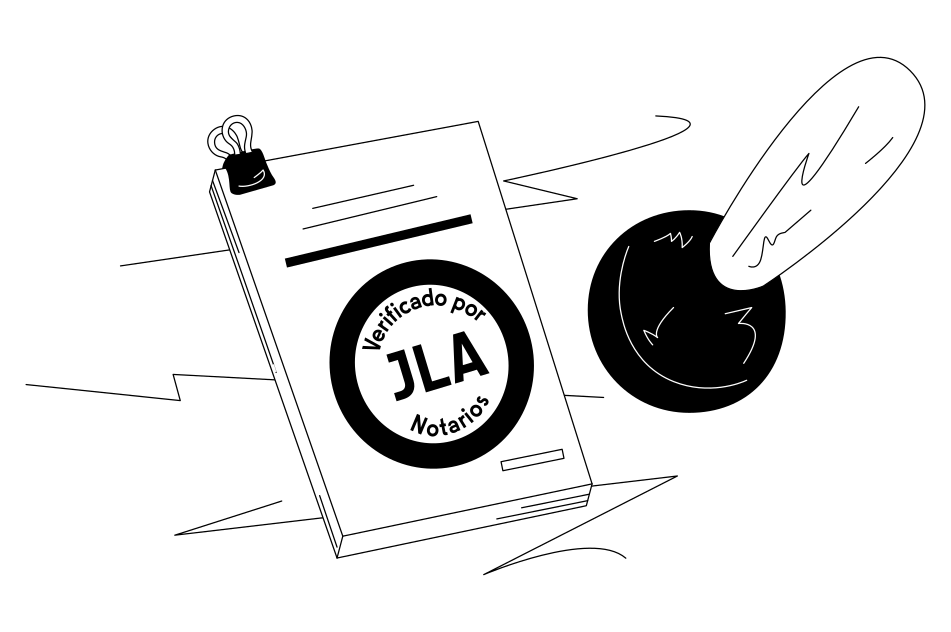
It is common knowledge that notaries attest. That important and simple action can guarantee things of vital importance, such as ensuring that the signature on a document is authentic or certifying that a copy of a document matches the original.
At JLA Notarios we will help you to certify a document or notarise a signature in accordance with the law and tailored to your specific needs.
In addition, these notarial procedures can be carried out conveniently through electronic means from 9 November 2023.
Notarial deeds
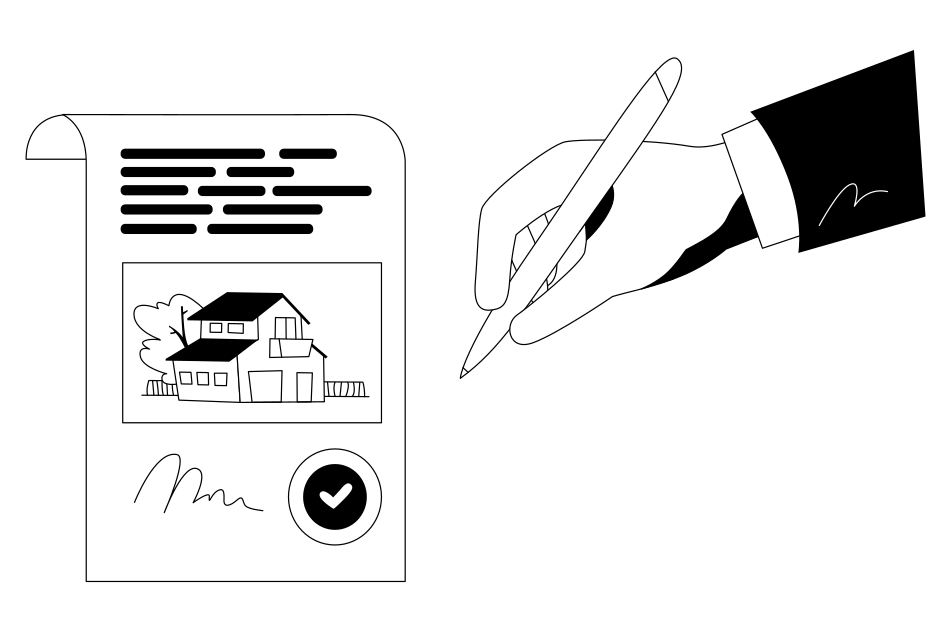
How many times have you wanted to record an event, a statement or the status of an object, or to notify someone of an issue. The law provides us with notarial deeds to deal with these matters.
At JLA Notarios we adapt to you, stating in the deed what you need and issuing your notifications and requests.
Oath of citizenship
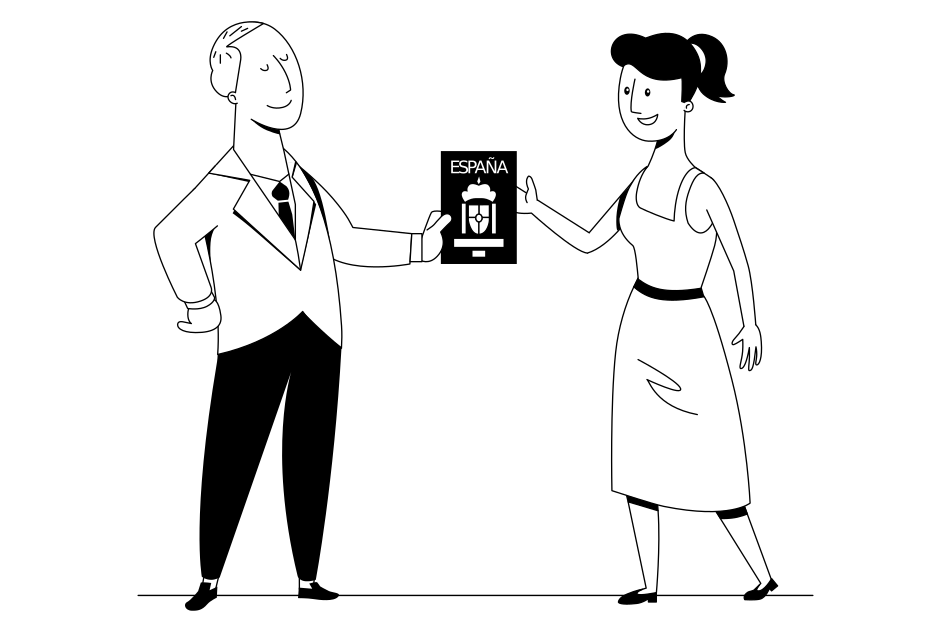
Behind every oath of citizenship lies a story of overcoming, sacrifice and waiting.
At JLA Notarios we know what this moment means and we provide an empathetic, agile and fast service. We don’t just advise you about the actual swearing-in, but also inform you of the future requirements that new Spanish citizens need to know.
We are your go-to notary’s office to swear the oath of citizenship before a notary public in Barcelona.
Apostille of the hague convention
Globalisation enables the free movement of people and documents of all kinds. How can you guarantee that a document has been officially issued? With an apostille of the Hague Convention.
JLA Notarios can obtain an apostille for all documents executed before us so they are valid and recognised abroad. We do this transparently and save you all the bureaucratic procedures involved.
Tax and registry procedures
Tax bureaucracy can cause a lot of headaches.
So JLA Notarios offers its clients the possibility of assessing and paying the many different taxes by the executing deeds and carrying out other procedures before the notary. We can also file them with the Land or Companies Registry so you do not have to concern yourself with it and can spend your time on the things that matter. We support you from start to finish.
Wills and inheritance
Making a will, making a declaration of heirs or awarding inheritance are very important moments in people’s lives.
At JLA Notarios we offer inheritance law services, both to arrange your estate and to divide up inheritance, guaranteeing the best advice for your particular needs while studying the tax implications of each case. We never forget the human factor. We even offer a notary service at home if necessary.
Contracts and property law
Over the course of our lives, we carry out important actions, such as buying a home, declaring a new-build, lifetime gifting to our children or ending partnerships, among many others.
At JLA Notarios we are experts in property and contract law and buying and selling property. We guide our clients, analysing each particular issue and always considering the tax burden of each transaction.
In addition, some of our notarial services can be performed online, so we can assist you from anywhere in Spain. Contact us to declare a new-build or a commonhold ownership structure online.
Mortgage
Taking out a mortgage is one of the biggest moments for anyone. Just think of the fees and interest you may have to pay for much of your life. So it is essential to have a trusted notary to help you understand what you are signing, explaining the tricky legal terms and their future consequences in simple words, to provide transparency and protect our clients.
At JLA Notarios we are aware of the importance of giving complete and understandable information to people about to sign a mortgage, novation or subrogation. We also advise and guide you on your future mortgage cancellation.
Loan agreements and credit facilities
Individuals and companies often need money to fulfil their dreams or projects. This can be obtained by taking out a loan or credit facility with your bank. When you sign, it is essential to understand the details properly to avoid future surprises.
JLA Notarios can be your trusted notary office, giving you accurate advice on loan contracts, providing a very agile and specialised service for processing loan contracts.
Bear in mind that from 9 November 2023, you will be able to sign your loan contracts from anywhere in Spain electronically by videoconference with JLA Notarios, saving you time and money. Do not hesitate to contact us to find out more about the notary office’s services in order to sign a loan contract online or sign a credit facility online.
Companies
Without entrepreneurship there is no future, so it is of vital importance to support our businesspeople and entrepreneurs.
At JLA Notaries we are familiar with companies’ life cycle, which enables us to provide legal assistance for companies in their different stages, whether incorporation, modifications of their articles of association, changes of director, share sales and purchases, capital increases and reductions, dissolution and closure, and everything related to commercial matters.
Powers of attorney
There are moments in life when a person needs to delegate. The law provides a tool for this: powers of attorney. Though a power of attorney, one person allows another person to act on their behalf.
At JLA Notarios we make sure that you understand the significance and risks of delegating or revoking powers of attorney, from a special power of attorney or power of attorney for lawsuits, to general powers of attorney or preventive powers of attorney for cases of incapacity.
We provide an agile service to sign powers of attorney. You can take your copy away immediately, saving you unnecessary trips, and from 9 November 2023 our clients will be able to sign all powers of attorney that are not general or preventive by videoconference through our digital notary office.
Family affairs
A prosperous society is based on the family and its protection. Family Law provides you with the tools to protect your family and its members, so its foundations are solid and its purposes can be achieved.
At JLA Notarios we provide legal advice on marriage or civil partnerships; property aspects of the family through marriage contracts or civil partnership contracts; the moments when the family relationship is ended, in cases such as divorce or separation; and protection of vulnerable people, such as minors or people with modified capacity, through deeds of appointment of guardians or executors or creation of protected assets. We do all of this in a way that makes everyone involved feel equally supported and secure.
Certifications and authentications
It is common knowledge that notaries attest. That important and simple action can guarantee things of vital importance, such as ensuring that the signature on a document is authentic or certifying that a copy of a document matches the original.
At JLA Notarios we will help you to certify a document or notarise a signature in accordance with the law and tailored to your specific needs.
In addition, these notarial procedures can be carried out conveniently through electronic means from 9 November 2023.
Notarial deeds
How many times have you wanted to record an event, a statement or the status of an object, or to notify someone of an issue. The law provides us with notarial deeds to deal with these matters.
At JLA Notarios we adapt to you, stating in the deed what you need and issuing your notifications and requests.
Oath of citizenship
Behind every oath of citizenship lies a story of overcoming, sacrifice and waiting.
At JLA Notarios we know what this moment means and we provide an empathetic, agile and fast service. We don’t just advise you about the actual swearing-in, but also inform you of the future requirements that new Spanish citizens need to know.
We are your go-to notary’s office to swear the oath of citizenship before a notary public in Barcelona.
Apostille of the hague convention
Globalisation enables the free movement of people and documents of all kinds. How can you guarantee that a document has been officially issued? With an apostille of the Hague Convention.
JLA Notarios can obtain an apostille for all documents executed before us so they are valid and recognised abroad. We do this transparently and save you all the bureaucratic procedures involved.
Tax and registry procedures
Tax bureaucracy can cause a lot of headaches.
So JLA Notarios offers its clients the possibility of assessing and paying the many different taxes by the executing deeds and carrying out other procedures before the notary. We can also file them with the Land or Companies Registry so you do not have to concern yourself with it and can spend your time on the things that matter. We support you from start to finish.


